

Web Development2026-06-24
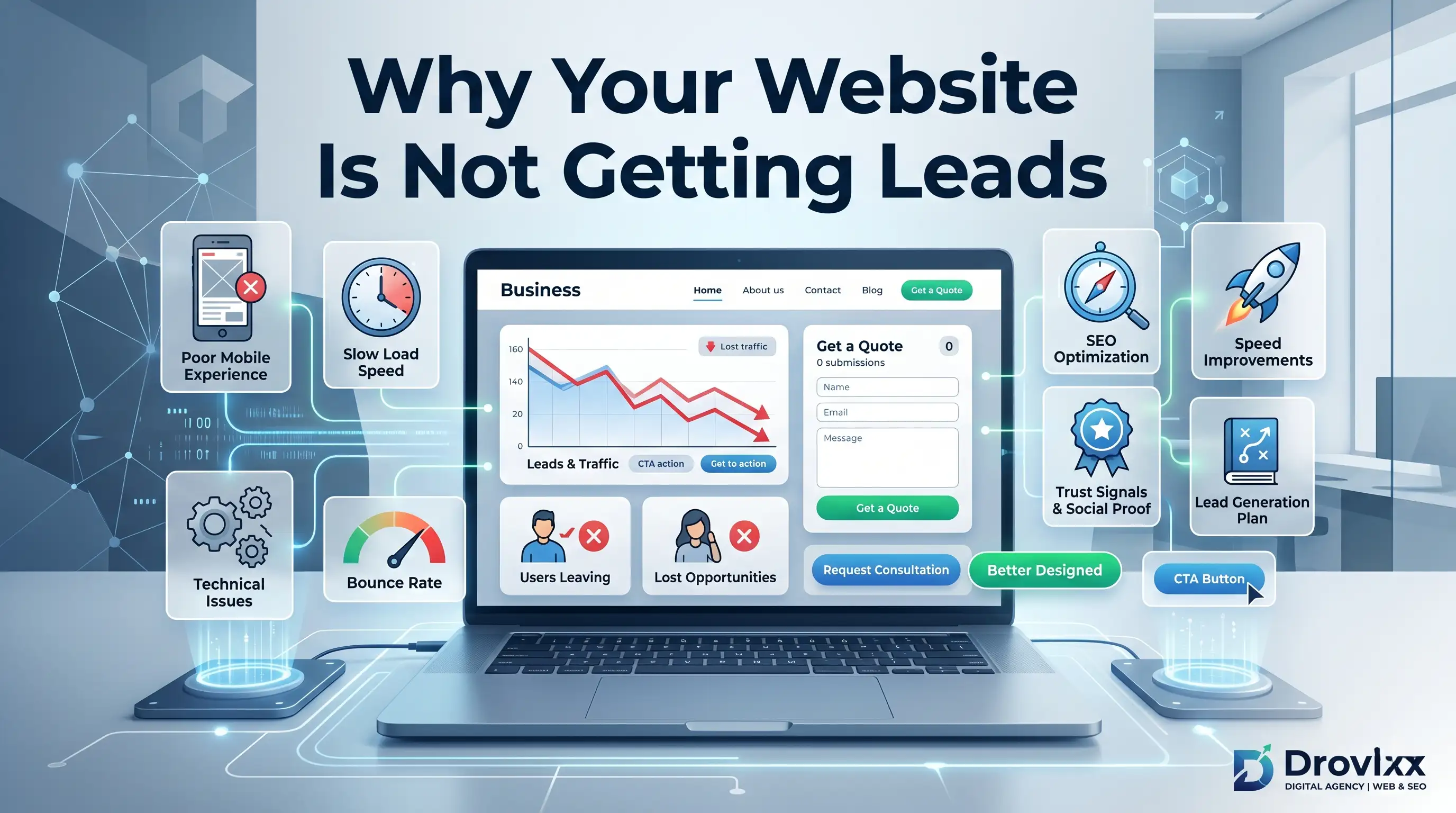
Why Your Website Is Not Getting Leads
Discover why your website is not getting leads or enquiries, and learn practical fixes that turn visitors into customers.
Read Article →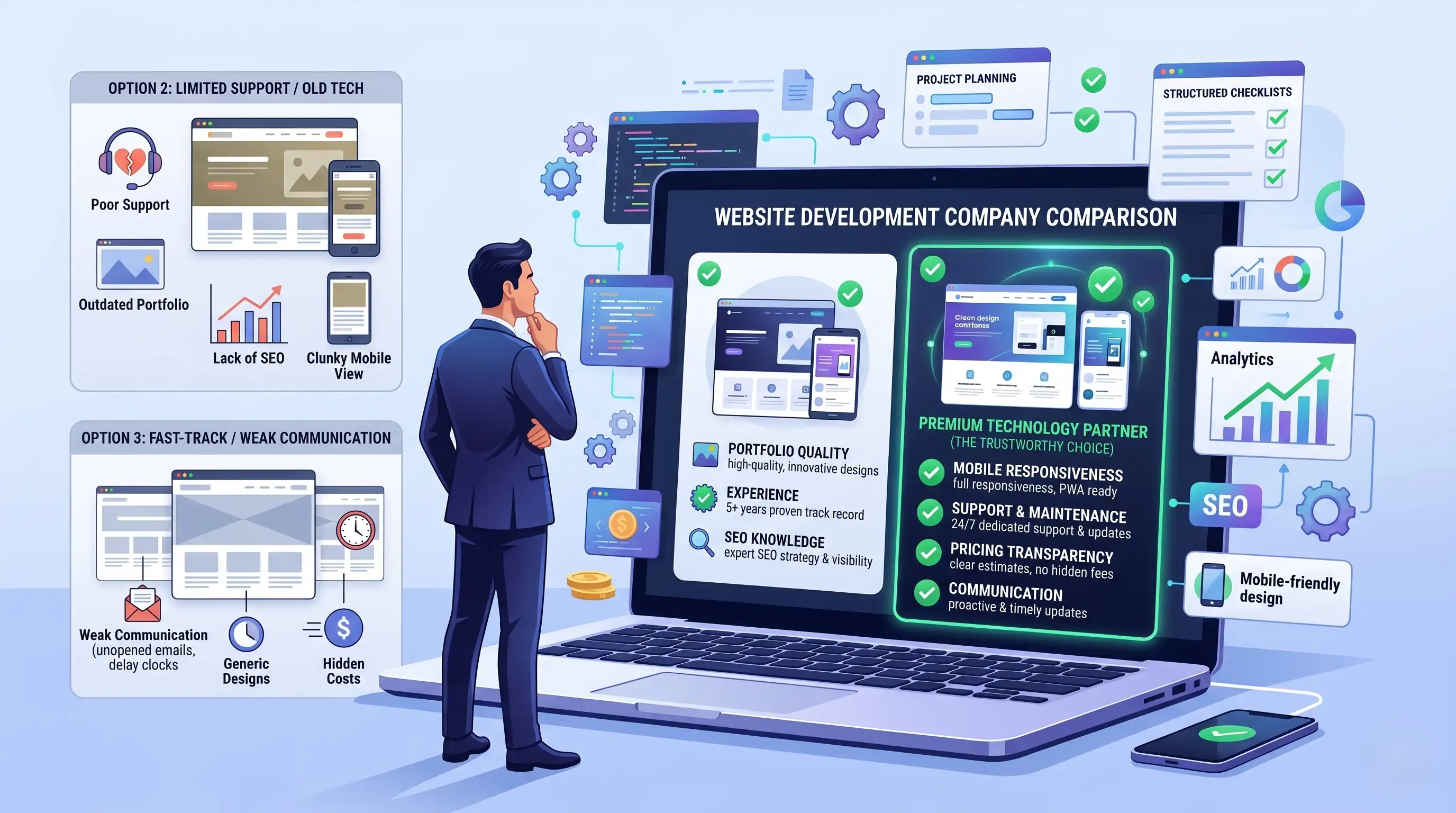
Choosing a website development company feels harder than it should be.
You may find many agencies and freelancers promising beautiful design, fast delivery, affordable pricing, or guaranteed results. Most portfolios look good, most quotes look different, and it becomes difficult to know who is actually capable and who is just good at sales.
This decision matters because your website is not just a one-time purchase. It is a long-term business asset that affects how customers find you, trust you, and contact you.
Choosing the wrong development partner can lead to wasted money, missed deadlines, poor performance, low leads, or a website that never gets completed properly.
This guide explains what to look for, what questions to ask, and what red flags to avoid before hiring a website development company.
Look for a company with a relevant portfolio, clear communication, technical knowledge, SEO understanding, transparent pricing, and ongoing support after launch.
The right website development company should understand your business goals, not just your design preferences.
A good company does not simply build pages. It helps you create a website that supports your marketing, lead generation, credibility, and long-term growth.
Your website is often the first serious interaction a customer has with your business.
A poorly built website can affect:
A bad website is not just a design problem. It becomes a business problem.
The wrong development partner can cost months of delay, technical issues, and missed business opportunities.
The cheapest quote is not always the best option.
Very low pricing may mean missing SEO setup, weak design, poor testing, no support, or limited customization.
A portfolio should not only look attractive. It should also show whether the company can build websites for businesses similar to yours.
Without a clear scope, misunderstandings can happen easily.
A proper scope document should explain what is included, what is not included, timeline, revision limits, and support terms.
Not all developers understand SEO.
A website can look good but still fail to rank on Google if it is not built with SEO basics.
Many businesses are left alone after launch.
You need to know who will handle updates, bugs, security, backups, and future improvements.
Good companies explain their process clearly.
If answers are vague before the project starts, communication may become worse later.
Check whether their previous websites look professional, modern, and relevant.
Ask if they can explain the goals and results behind those projects, not just the visuals.
A company does not need to work only in your industry, but similar experience helps.
For example, ecommerce, local service, startup, restaurant, real estate, and SaaS websites all need different planning.
Ask what technologies or platforms they use and why.
The technology should match your business needs, budget, and future plans.
Your website must work smoothly on mobile devices.
Check whether their previous websites are easy to use on phones, not only desktops.
A good website company should understand basic SEO.
This includes clean page structure, fast loading, proper headings, metadata, mobile performance, and keyword-focused content.
Pay attention to how they communicate before hiring.
If they explain clearly, respond properly, and understand your goals, that is a good sign.
A professional company should have a clear process.
This may include discovery, planning, design, development, testing, launch, and support.
Ask what happens after the website goes live.
Websites need updates, bug fixes, security checks, backups, and improvements.
A website company should understand basic security.
This includes SSL, safe hosting, secure forms, updates, backups, and protection from common risks.
Your website should be able to grow with your business.
You may need more pages, new services, SEO content, ecommerce, booking, user accounts, or integrations later.
The quote should clearly explain what is included.
Avoid unclear pricing where important items become surprise costs later.
The timeline should be realistic.
Be careful with promises like full custom website in two days unless the scope is very small.
1. Can you show websites you built for businesses similar to mine?
2. What is your process from planning to launch?
3. How do you handle SEO during development?
4. What happens if I need changes after launch?
5. Do you provide maintenance and support?
6. What is the realistic timeline for my project?
7. How do you handle revisions and scope changes?
8. What platform or technology will you use and why?
9. How do you test mobile responsiveness and speed?
10. What is included in the pricing and what costs extra?
A reliable company should answer these questions clearly.
A good agency explains things clearly and responds on time.
A bad agency gives vague answers, delays responses, or confuses you with unnecessary jargon.
A good agency provides a clear pricing breakdown.
A bad agency gives unclear pricing and adds surprise charges later.
A good agency offers post-launch support and maintenance.
A bad agency disappears after the website goes live.
A good agency builds the website with SEO basics from the beginning.
A bad agency ignores SEO or treats it as an afterthought.
A good agency creates professional, consistent, brand-focused design.
A bad agency uses generic templates without proper customization.
A good agency tests the website across devices and browsers.
A bad agency delivers a site with bugs, layout issues, and poor performance.
A good agency provides scope, timeline, and clear project details.
A bad agency depends only on verbal promises.
If the price is far below normal, something is usually missing.
It may be design quality, SEO setup, testing, support, or ownership clarity.
A company that cannot show real previous work should be treated carefully.
If support is not clearly mentioned, assume it is not included.
Verbal promises are risky.
Always ask for written scope, pricing, timeline, and support details.
If communication is poor before payment, it may become worse after payment.
No genuine company can guarantee number one rankings on Google.
SEO depends on competition, website quality, content, authority, and search algorithm changes.
If they cannot explain basic SEO clearly, your website may not be built for search visibility.
A trustworthy company gives you time to understand the proposal and ask questions.
Website cost depends on project scope, features, design quality, content, location, and the experience of the development company.
Instead of choosing based only on price, compare what is included.
A basic website usually includes pages like Home, About, Services, and Contact.
This is suitable for early-stage businesses that need a simple online presence.
A professional website includes custom design, multiple service pages, SEO setup, lead capture forms, and better structure.
This is suitable for most growing businesses.
An ecommerce website includes product pages, cart, checkout, payment integration, and order management.
Cost depends on product count, features, and integrations.
A custom web application includes advanced functionality such as user accounts, dashboards, booking systems, payments, or business-specific workflows.
This usually requires higher investment because the scope is more complex.
Always request a detailed written quote based on your actual requirements.
A freelancer can be a good option for very small and simple projects.
They may cost less, but capacity, support, and scalability can be limited.
An agency is usually better for businesses that need design, development, SEO structure, and a proper process.
However, quality can vary from agency to agency.
A technology partner is suitable when you want long-term support, website improvements, SEO, app development, maintenance, and future growth.
This is often more valuable for businesses that see their website as a long-term business asset.
A website alone is not the finish line. It is the starting point.
To generate results, your website also needs:
A website that looks good but does not bring enquiries is not enough.
The right development partner should think beyond design and focus on business outcomes.
At Drovixx, we treat website development as a business investment, not just a design project.
Our approach focuses on:
We do not believe in one-size-fits-all websites.
We build websites based on your business stage, target customers, and growth goals.
Choosing a website development company is not just about finding someone who can build a good-looking website.
It is about choosing a partner who understands your business, communicates clearly, builds with long-term goals in mind, and supports you after launch.
Use this guide to compare companies carefully before making a decision.
If you are evaluating website development partners and want a clear, honest conversation about your project, Drovixx can help.
Contact Drovixx to discuss your website project.
Check their portfolio, communication, process, pricing transparency, and post-launch support.
Not always. Very low pricing may mean poor quality, missing SEO setup, weak support, or hidden costs.
Freelancers are usually suitable for small projects. Agencies often provide a more structured process, broader skills, and better support.
No. No genuine company can guarantee exact Google rankings because rankings depend on many factors outside direct control.
It should include scope of work, pricing, timeline, revisions, ownership, support, and maintenance details.
SEO is very important. A website without SEO basics may look good but fail to attract traffic.
Post-launch support may include bug fixes, updates, backups, security checks, content changes, and maintenance.
Drovixx focuses on business outcomes by combining SEO-ready development, mobile-first design, performance, and long-term support.
DROVIXX helps businesses build professional websites, improve Google visibility through SEO, and develop modern mobile applications.
Explore more insights from DROVIXX about business growth, websites, SEO, and app development.
Discover why your website is not getting leads or enquiries, and learn practical fixes that turn visitors into customers.
Read Article →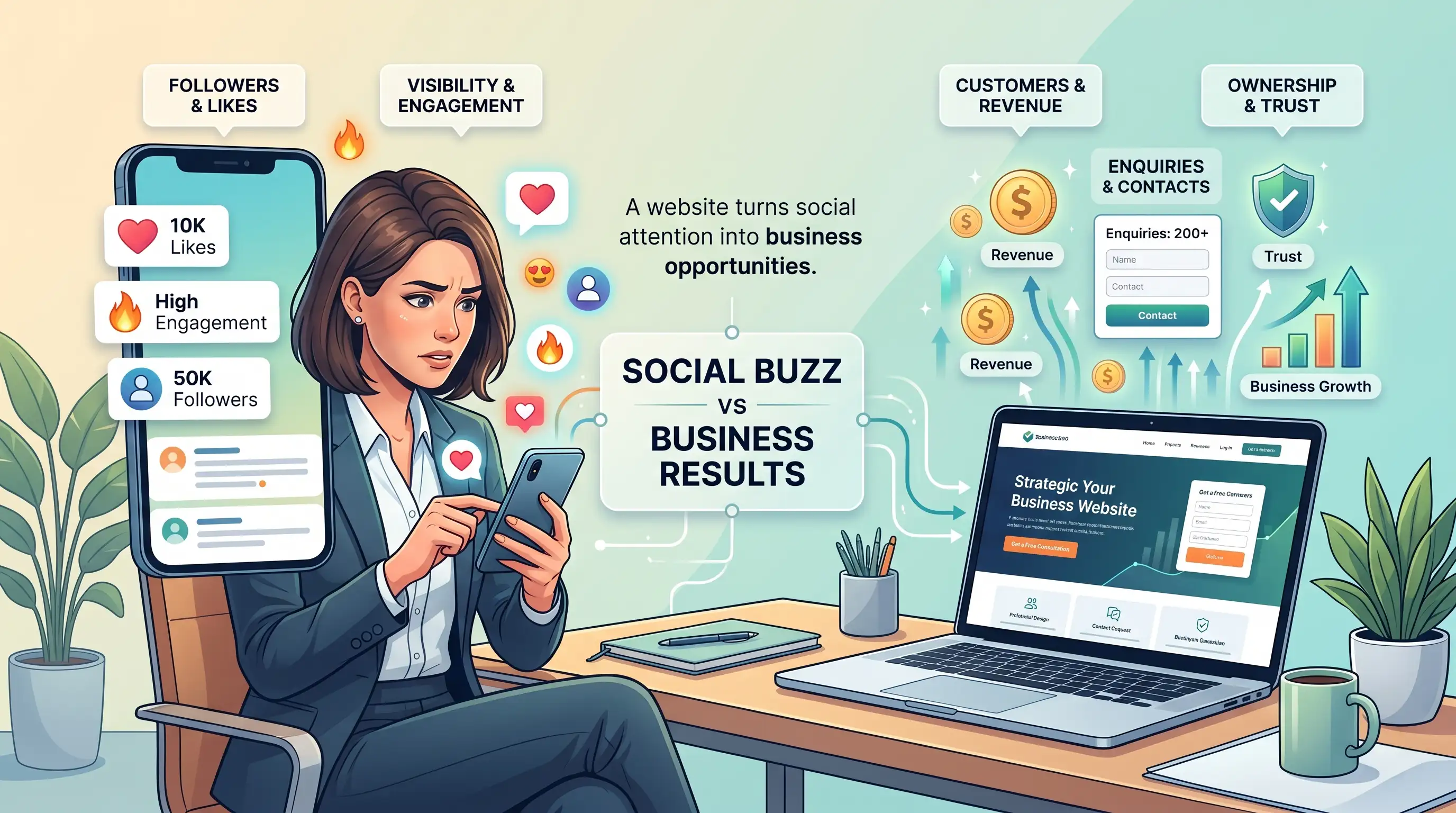
Social media helps you connect with customers, but it has real limits. Learn why your business still needs a website for trust, leads, and growth.
Read Article →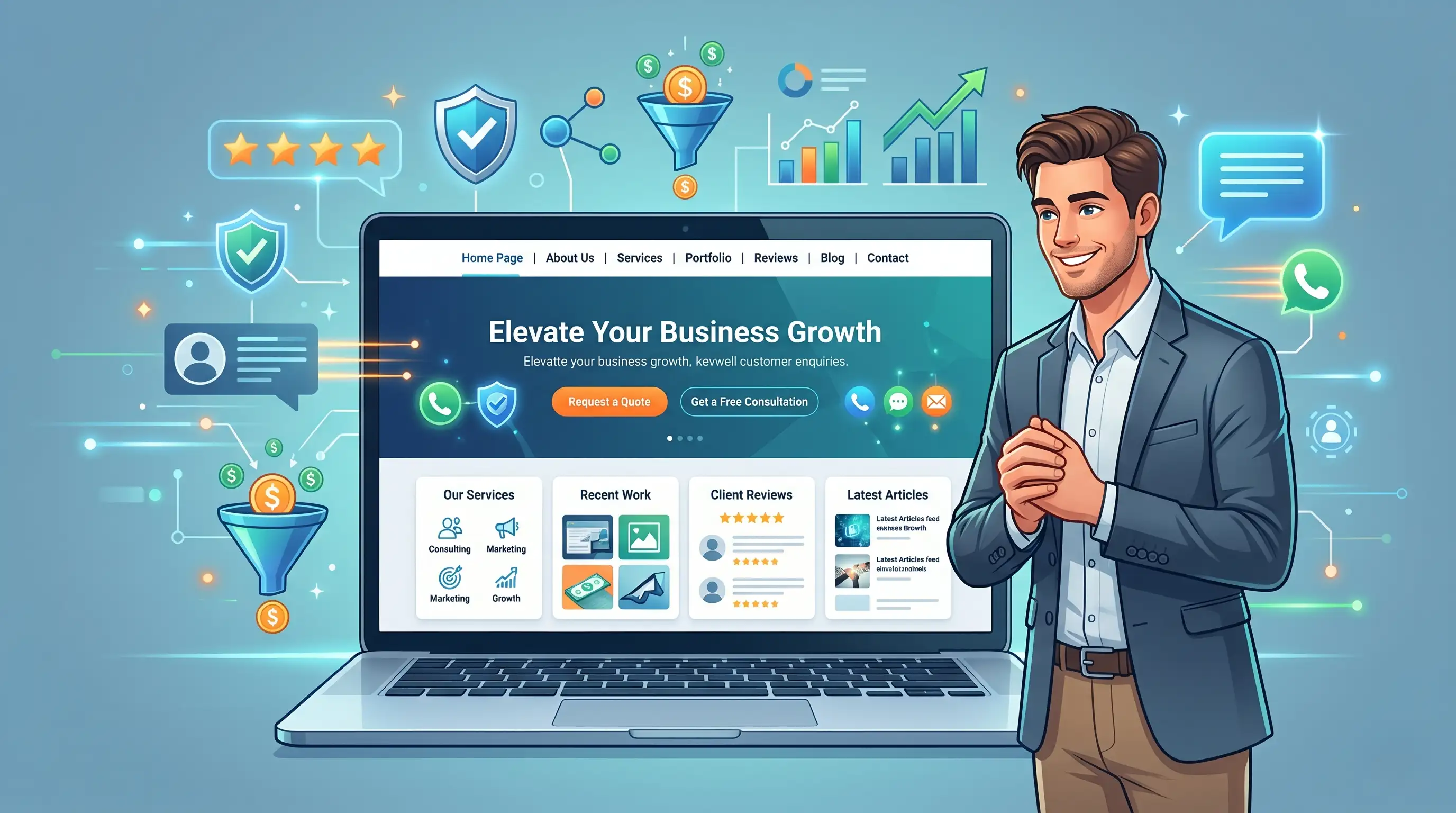
Not sure what pages your business website needs? Learn the essential and optional pages every business website should include.
Read Article →