

Web Development2026-06-24
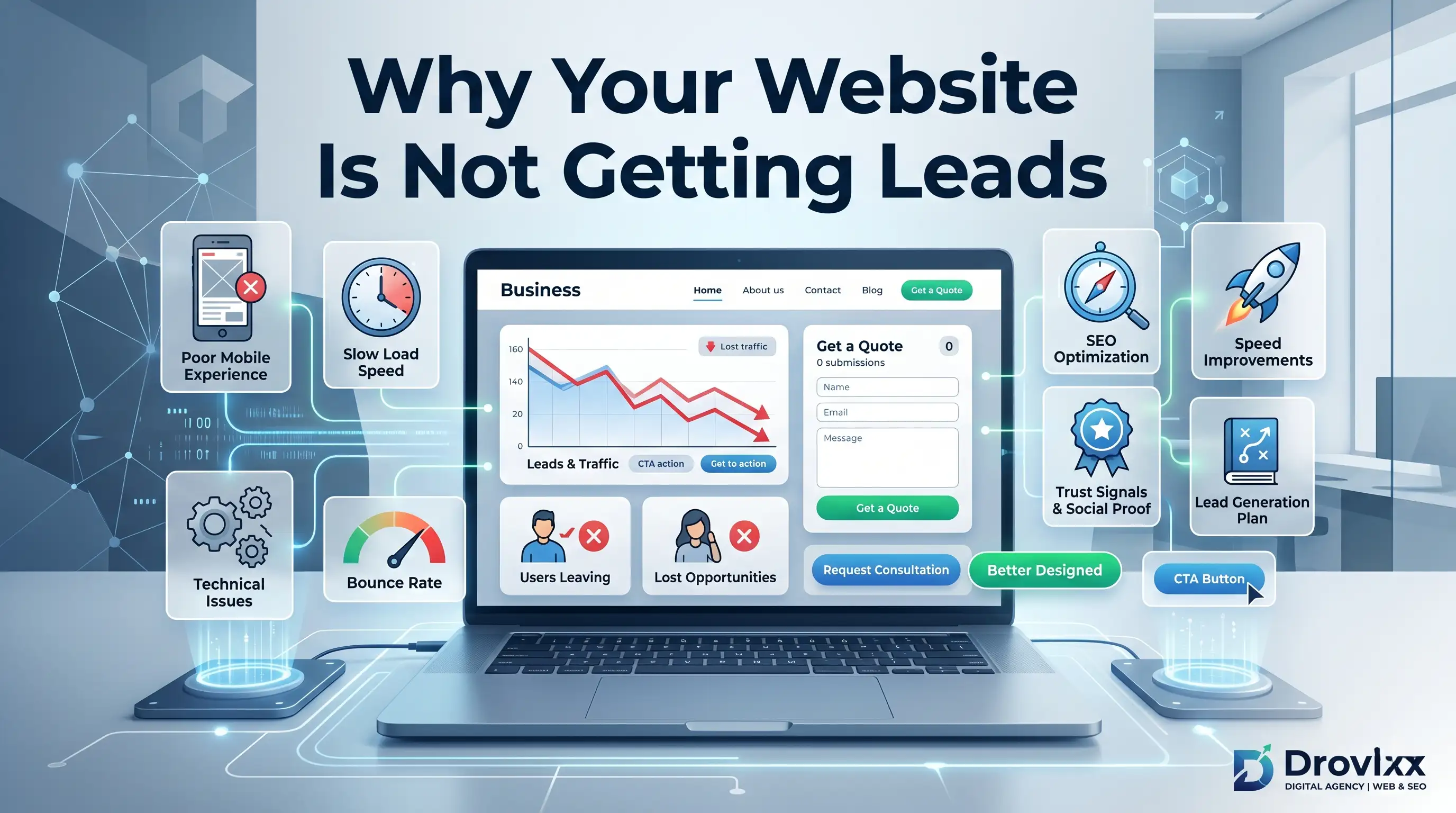
Why Your Website Is Not Getting Leads
Discover why your website is not getting leads or enquiries, and learn practical fixes that turn visitors into customers.
Read Article →
You are getting visitors to your website.
Your analytics may show steady traffic, and maybe that traffic is growing month by month.
But enquiries are not increasing.
People are visiting your website and leaving without calling, filling out a form, sending a WhatsApp message, or contacting you.
This is a common problem for small businesses.
Traffic gets people to your website, but conversion turns those visitors into enquiries.
This guide explains why visitors leave without contacting you and how to turn more website visitors into real enquiries.
You turn website visitors into enquiries by clearly communicating your value, building trust quickly, making contact easy, and guiding visitors toward a specific action.
The goal is not to trick people.
The goal is to remove confusion, hesitation, and friction.
Most visitors who land on your website already have some level of interest.
Your website's job is to keep that interest and guide them to the next step.
Website conversion means a visitor takes a desired action.
For a business website, this action may be:
If 100 people visit your website and 2 people contact you, your conversion rate is 2%.
Improving this percentage can bring more enquiries without increasing traffic.
Many business owners focus only on getting more traffic.
They invest in SEO, ads, social media, and referrals.
But if the website does not convert visitors, more traffic will not solve the real problem.
For example:
If 1,000 visitors come to your website and only 1% enquire, you get 10 enquiries.
If the same 1,000 visitors convert at 2%, you get 20 enquiries.
That means improving conversion can sometimes be more powerful than simply increasing traffic.
Traffic means people visiting your website.
It comes from SEO, Google Ads, social media, referrals, direct visits, or other marketing channels.
Enquiries happen when visitors take action.
This could be a form submission, phone call, WhatsApp message, booking, or quote request.
Traffic is about getting people to the website.
Enquiries are about convincing and enabling those people to contact you.
You need both.
If visitors do not quickly understand what you do and how you help, they leave.
Your website should clearly explain your offer within a few seconds.
If there is no clear next step, visitors may browse and leave.
A strong CTA tells them what to do next.
Outdated or messy design can reduce trust.
Even if your business is good, poor design can make visitors feel unsure.
Slow websites lose visitors before they even see your content.
Speed directly affects enquiries.
Visitors may hesitate if they do not see testimonials, reviews, case studies, or proof of work.
Trust signals reduce doubt.
If visitors cannot find services, pricing, contact details, or important information, they may leave.
Navigation should be simple and clear.
Your website should clearly state what you do, who you help, and why someone should choose you.
This should appear near the top of your homepage.
Avoid vague lines like "We provide innovative solutions."
Use clear lines that explain the real value.
Your CTA should tell visitors exactly what to do next.
Examples:
Repeat your main CTA on important pages.
Trust signals help visitors feel confident.
Examples include:
Place trust signals near important CTAs.
Testimonials show that real customers trust your business.
Good testimonials should be specific.
Instead of only saying "Great service", they should explain what problem was solved and what result the customer got.
Case studies are useful for higher-value services.
They show the problem, your approach, and the result.
This helps visitors believe that you can solve their problem too.
Keep contact forms simple.
Ask only for essential information.
Usually, name, phone or email, and message are enough.
Long forms can reduce enquiries.
Many customers prefer messaging instead of calling or filling out forms.
Adding WhatsApp can reduce friction, especially for local businesses and service providers.
Make the WhatsApp button easy to find.
A lead magnet gives value in exchange for contact information.
Examples:
This works well for visitors who are interested but not ready to buy immediately.
Fast pages keep visitors engaged.
Slow pages cause visitors to leave before they take action.
Compress images, reduce scripts, and use reliable hosting.
Many visitors browse from mobile phones.
Your forms, buttons, menus, and WhatsApp links should work smoothly on mobile.
If mobile experience is poor, enquiries will drop.
People are more likely to take action when they clearly understand your offer.
Confusion creates delay.
Delay often becomes lost enquiry.
Visitors trust other customers more than business claims.
Reviews and testimonials reduce perceived risk.
Even small obstacles can stop a visitor from contacting you.
A long form, hidden phone number, or confusing CTA can reduce enquiries.
A CTA like "Get a Free Quote" feels clearer than "Submit".
Specific actions help visitors understand what happens next.
Your homepage often decides whether visitors continue or leave.
A strong homepage should include:
Avoid clutter and long blocks of text.
The homepage should guide visitors toward action.
Better CTA: Get My Free Quote
This works better because it tells the visitor what they will receive.
Better CTA: See How It Works
This feels more specific and useful.
Better CTA: Talk to an Expert Today
This feels more personal and action-focused.
Better CTA: Book a Free Consultation
This gives a clear reason to click.
Better CTA: Start Your Free Trial
This explains the value and reduces risk.
Ask only for information you genuinely need.
Long forms reduce completion rates.
Every required field adds friction.
Keep required fields minimal.
Forms should be easy to fill on a phone.
Use clear labels and large input fields.
After submission, tell users their enquiry was received.
Also explain what happens next.
Some visitors prefer WhatsApp, phone, or email.
Give multiple contact choices.
Reviews and testimonials reduce hesitation.
They show that other people trusted your business and had a good experience.
This is especially important for new visitors who do not know you yet.
Good placement areas include:
Testimonials work best when they are specific and believable.
Case studies show proof in detail.
They explain:
For higher-value services, case studies can strongly influence enquiries.
They help visitors think, "This business has solved a problem like mine before."
Mobile experience affects conversions heavily.
Many visitors compare businesses from their phones.
Your mobile website should have:
If visitors struggle on mobile, they may choose a competitor.
Slow websites reduce enquiries.
A slow page can lose visitors before they see your offer.
To improve speed:
Speed improvement is one of the most practical conversion fixes.
Your CTA should not be buried in the footer.
Place it clearly throughout key pages.
Visitors should immediately understand what you offer.
Avoid generic business language.
Long forms reduce form submissions.
Keep forms short.
If your mobile site is difficult, you lose many potential enquiries.
Without proof, visitors may hesitate.
Add testimonials, reviews, portfolio, and case studies.
Your website should guide visitors toward action.
It should not only display information.
Use this checklist:
A poor website has vague or hidden CTAs.
A high-converting website uses clear and repeated CTAs.
A poor website has no testimonials, reviews, or proof.
A high-converting website shows trust signals clearly.
A poor website has confusing menus.
A high-converting website makes important pages easy to find.
A poor website loads slowly.
A high-converting website loads fast on all devices.
A poor website looks outdated or inconsistent.
A high-converting website looks clean, modern, and professional.
A poor website has long forms and hidden contact details.
A high-converting website uses short forms and multiple contact options.
A cleaning service can add a visible "Book a Free Estimate" button and simplify its contact form to increase enquiries.
A restaurant can add online reservations directly on the homepage to reduce booking friction.
A travel agency can add destination-specific testimonials and trip examples to build confidence before quote requests.
A real estate agency can add WhatsApp and agent-specific contact buttons on property listing pages.
A SaaS startup can add a clear "Start Free Trial" CTA above the fold with a short explainer section.
A consulting firm can replace a vague "Contact Us" link with "Book a Free Consultation" and add case studies near the CTA.
Getting visitors to your website is only the first step.
The next step is turning those visitors into real enquiries.
That happens when your website clearly explains your value, builds trust, loads fast, works well on mobile, and makes contact easy.
You do not always need a full website redesign.
Sometimes, improving CTAs, shortening forms, adding testimonials, and fixing mobile issues can make a big difference.
If you are getting traffic but not enough enquiries, Drovixx can help.
We audit your website, find where visitors are dropping off, and improve design, messaging, speed, and conversion flow.
Contact Drovixx to turn more website visitors into enquiries.
This usually means you have a conversion problem. Your website may have unclear messaging, weak CTAs, poor trust signals, or a difficult contact process.
Improving CTA clarity and simplifying the contact form are often the fastest fixes.
Testimonials are very important because they build trust and reduce hesitation.
Yes. Slow websites can cause visitors to leave before they see your offer or contact options.
Most important pages should have a clear CTA that guides visitors to the next step.
Keep it as short as possible. Name, contact information, and message are usually enough.
Yes. If many visitors use mobile, improving mobile experience can increase enquiries.
Drovixx improves website messaging, design, speed, mobile experience, CTAs, and conversion flow to help generate more enquiries.
DROVIXX helps businesses build professional websites, improve Google visibility through SEO, and develop modern mobile applications.
Explore more insights from DROVIXX about business growth, websites, SEO, and app development.
Discover why your website is not getting leads or enquiries, and learn practical fixes that turn visitors into customers.
Read Article →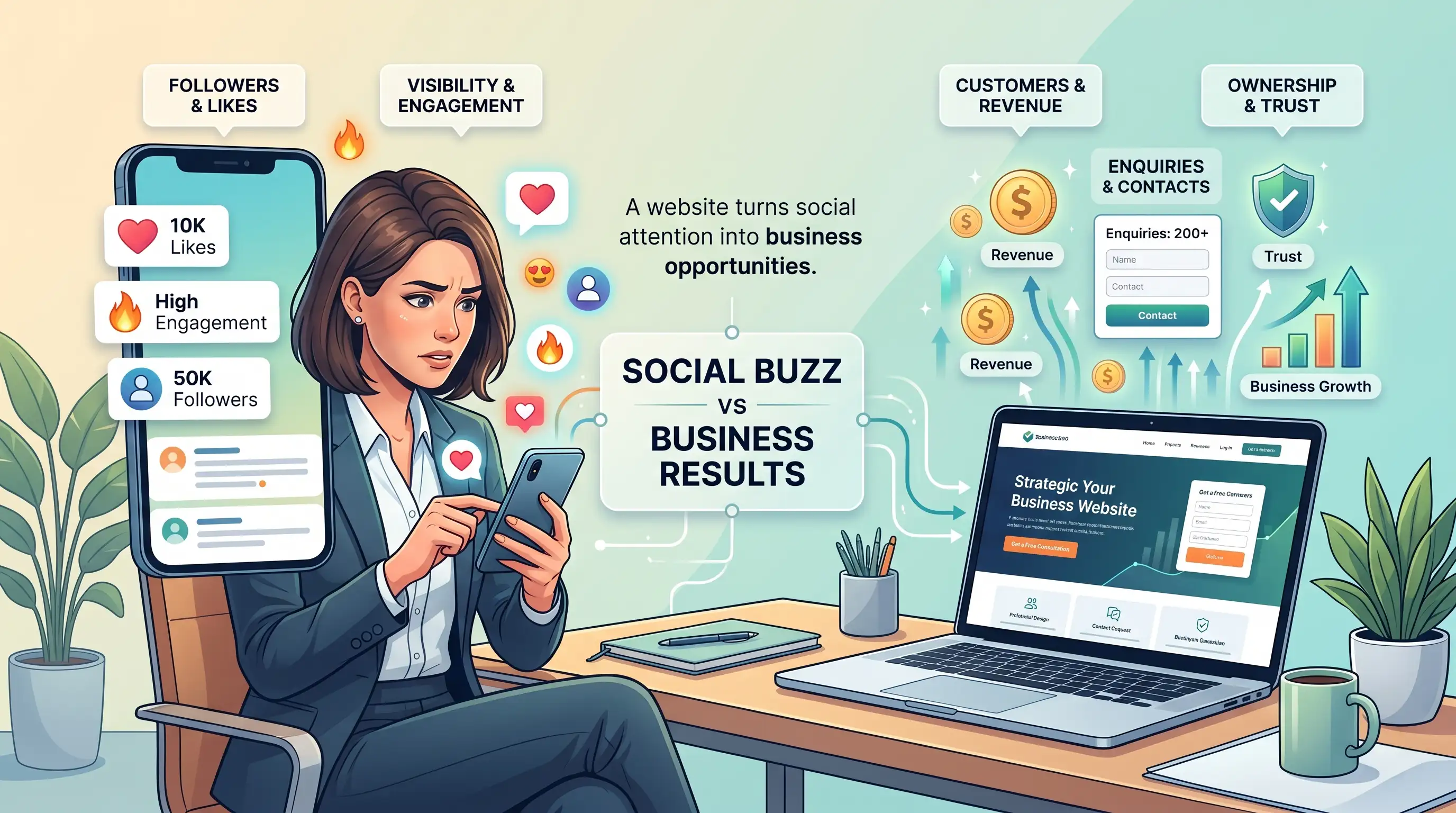
Social media helps you connect with customers, but it has real limits. Learn why your business still needs a website for trust, leads, and growth.
Read Article →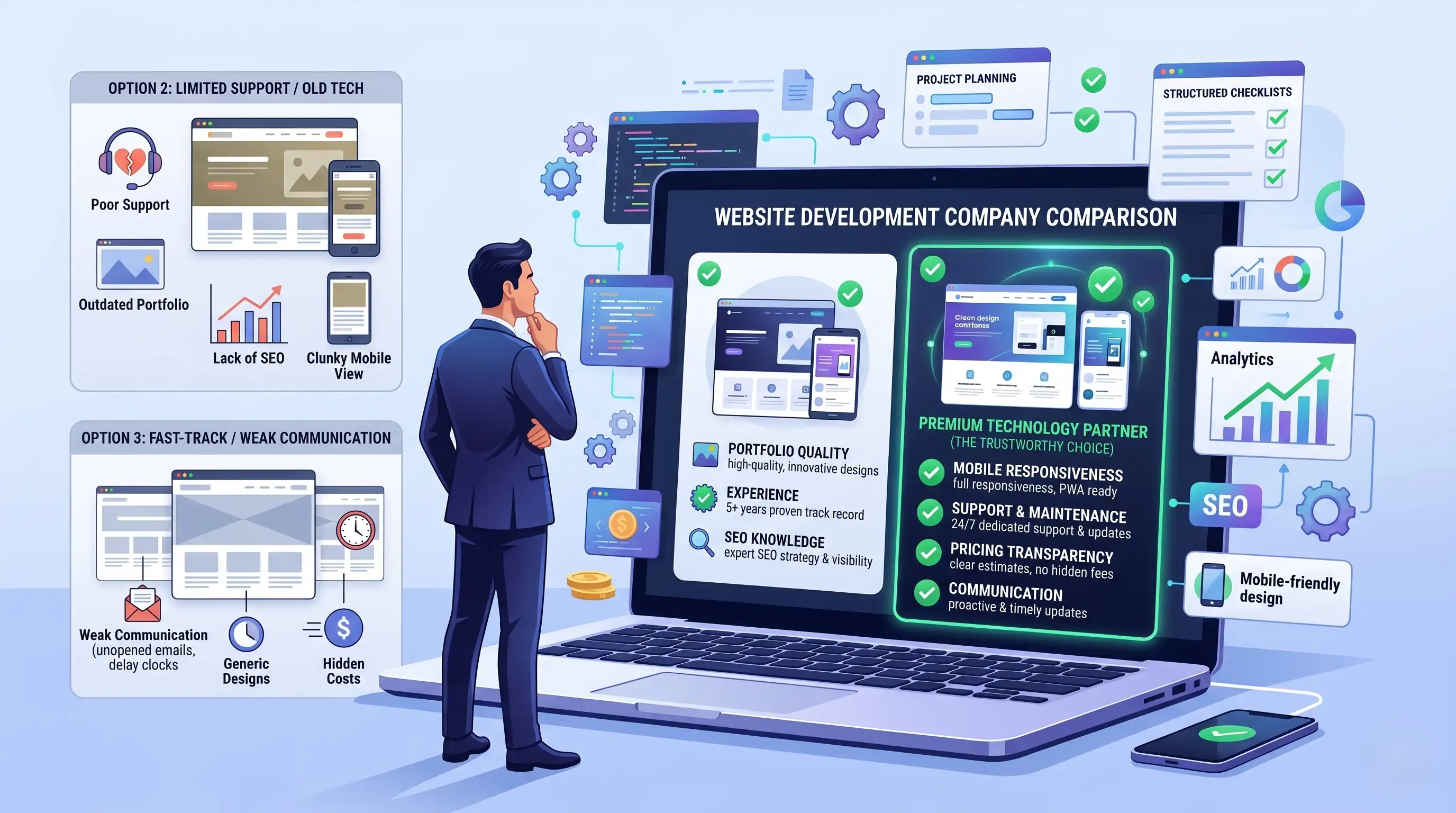
Not sure how to pick a website development company? Use this practical checklist, key questions, and red flags to avoid before you hire.
Read Article →