

SEO2026-06-24
SEO vs Google Ads: Which Is Better for Small Businesses?
Compare SEO and Google Ads to understand costs, speed, ROI, and long-term business growth. Learn which strategy is right for your business.
Read Article →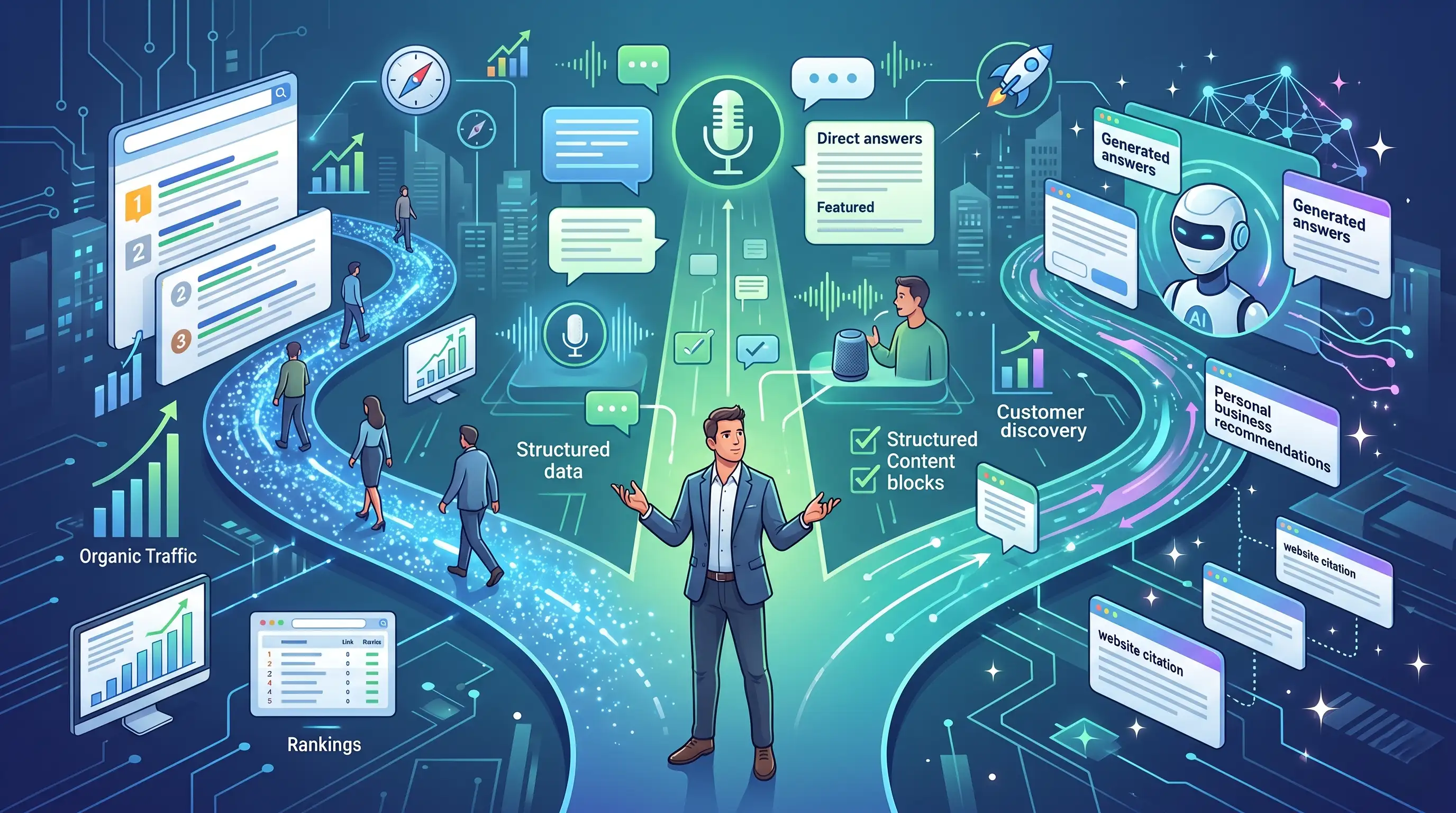
For many years, getting found online mainly meant ranking on Google.
Businesses focused on SEO, keywords, backlinks, and website content to appear on page one.
That still matters, but search is changing.
More people now get answers directly from AI tools, voice assistants, featured snippets, and AI-powered search summaries.
This shift has introduced two newer terms: AEO and GEO.
AEO means Answer Engine Optimization.
GEO means Generative Engine Optimization.
These are not replacements for SEO. They build on top of SEO.
This guide explains the difference between SEO, AEO, and GEO, and what businesses should practically do in 2026.
SEO focuses on ranking your website in traditional search engine results.
AEO focuses on getting your content selected as a direct answer in answer boxes, featured snippets, voice search, and AI summaries.
GEO focuses on making sure your business and content are accurately represented when AI tools generate conversational answers or recommendations.
In simple terms:
These strategies overlap. Strong SEO usually supports AEO and GEO.
SEO stands for Search Engine Optimization.
It is the process of improving your website so it ranks higher in search engine results.
SEO helps your business appear when people search for your products, services, or information related to your industry.
SEO usually includes:
The main goal of SEO is to help your website appear as a relevant result when users search on Google or other search engines.
AEO stands for Answer Engine Optimization.
AEO is the process of structuring your content so search engines and answer systems can easily extract and show it as a direct answer.
AEO is useful for:
AEO usually includes:
The main goal of AEO is to help your content become the answer, not just one of the search results.
GEO stands for Generative Engine Optimization.
GEO is the process of improving your content and online presence so AI tools can understand, summarize, reference, or recommend your business accurately.
GEO is useful for AI-driven discovery.
This includes AI search tools, conversational assistants, and AI-generated search summaries.
GEO usually includes:
The main goal of GEO is to help your business appear correctly and confidently when AI tools generate answers.
Traditional search gave users a list of website links.
Users searched a keyword, scanned titles and descriptions, then clicked a result.
Google started showing direct answers at the top of search results.
This allowed users to get answers without always clicking a website.
Voice search made queries more conversational.
People started asking full questions instead of typing short keywords.
AI tools changed how people search.
Users can now ask detailed questions and receive summarized answers instead of a list of links.
Search engines are also adding AI-generated summaries directly into search results.
This means businesses need content that works for search engines, answer engines, and AI systems.
SEO aims to rank your website in search results.
AEO aims to make your content the direct answer.
GEO aims to make your business accurately represented in AI-generated answers.
SEO mainly focuses on Google, Bing, and traditional search engines.
AEO focuses on featured snippets, voice assistants, answer boxes, and FAQ results.
GEO focuses on AI search summaries and conversational AI tools.
SEO content is usually comprehensive and keyword-focused.
AEO content is direct, concise, and question-focused.
GEO content is clear, factual, well-structured, and easy for AI to summarize.
SEO often targets broad research, comparison, service, or buying intent.
AEO targets specific question-based intent.
GEO targets conversational, exploratory, and recommendation-based intent.
SEO uses keywords, technical SEO, backlinks, content quality, and internal links.
AEO uses FAQs, schema markup, concise answers, and clear formatting.
GEO uses factual clarity, consistency, authority, reviews, mentions, and structured information.
SEO brings sustainable organic traffic.
AEO improves visibility in direct answer results.
GEO helps your business remain visible as AI search behavior grows.
Search engines crawl your website pages, understand the content, and rank them for relevant search queries.
They consider factors such as:
Good SEO helps search engines understand your website and trust it enough to show it to users.
Answer engines look for content that clearly answers a specific question.
For example, if someone searches "what is local SEO", Google may show a short answer from a page that explains it clearly.
AEO works best when content is:
AEO helps your content appear in answer-focused search features.
Generative AI tools create answers by understanding and combining information from multiple sources.
Unlike traditional search, there may not be a clear ranking list.
The AI may summarize, compare, recommend, or explain based on the information it understands.
GEO works best when your business information is:
GEO is still evolving, so no one can guarantee exact results across all AI platforms.
But the practical foundation is clear: publish useful content, keep business information consistent, and build trust across the web.
A bakery creates a page for custom birthday cakes in Chennai.
When someone searches that phrase, the page appears in Google search results.
That is SEO.
A software company writes a clear FAQ answer for "What is CRM?"
Google may show that answer directly in a featured snippet or People Also Ask result.
That is AEO.
A consulting company publishes helpful content, has consistent business information, strong reviews, and credible mentions.
When someone asks an AI tool for recommended consultants in that niche, the business may be included or accurately described.
That is GEO.
GEO is newer, but it should not be ignored.
Customer behavior is changing.
Many users now ask AI tools for:
If your business is not clearly represented online, AI tools may not mention you or may misunderstand what you offer.
The good news is that GEO does not require throwing away SEO.
Many GEO improvements also improve SEO and AEO.
Clear content, consistent information, trust signals, and helpful answers are useful across all search systems.
The best approach is to build one strong content foundation that supports all three.
Write content that answers real customer questions.
Avoid generic filler content.
Headings help readers, search engines, and AI systems understand your content.
FAQs support AEO and GEO because they answer direct questions in a simple format.
Make sure your website loads fast, works on mobile, uses HTTPS, and has clean structure.
Your business name, services, location, contact details, and brand information should be consistent across your website, Google profile, directories, and social platforms.
Schema helps search engines understand your content better.
Useful schema types include Article, FAQ, LocalBusiness, Product, Service, and Organization.
Reviews, backlinks, citations, case studies, testimonials, and quality mentions help build trust.
Connect related pages together.
This helps visitors and search systems understand your website structure.
Use this checklist:
Traditional SEO is still important, but businesses should also structure content for answers and AI summaries.
Generic content is harder for users and AI systems to trust.
Specific, helpful content performs better.
FAQs are useful for AEO because they directly answer common questions.
If your business details are different across the web, search engines and AI tools may become confused.
Clear content is better than complicated content.
If humans cannot understand it easily, AI systems may also struggle.
GEO is still evolving, but user behavior is already moving toward AI-assisted search.
AEO and GEO do not replace SEO.
They work best when your SEO foundation is strong.
Search is becoming a mix of traditional results, direct answers, and AI-generated summaries.
Users may still click Google search results.
They may also ask voice assistants.
They may use AI tools for recommendations.
They may read AI summaries before visiting websites.
This means businesses need to create content that is clear, trustworthy, structured, and useful across different discovery channels.
The best strategy is not chasing every new acronym.
The best strategy is building strong fundamentals:
These fundamentals support SEO, AEO, and GEO together.
SEO, AEO, and GEO are not separate battles.
They are different layers of online visibility.
SEO helps people find your website through search engines.
AEO helps your content answer questions directly.
GEO helps AI tools understand and represent your business accurately.
Instead of treating AEO and GEO as confusing new trends, think of them as extensions of good SEO and good content.
If your website is clear, helpful, technically strong, and consistent across the web, you are building a strong foundation for all three.
Drovixx helps businesses build websites and content strategies designed for modern search.
We focus on SEO fundamentals, structured content, clear service pages, and AI-ready visibility.
Contact Drovixx to improve your search visibility across Google and AI-driven search.
AEO stands for Answer Engine Optimization. It focuses on structuring content so it can appear as a direct answer in search features, voice search, and AI summaries.
GEO stands for Generative Engine Optimization. It focuses on helping AI tools accurately understand, summarize, and recommend your business or content.
No. GEO does not replace SEO. It builds on strong SEO fundamentals such as helpful content, technical quality, and credibility.
Not completely. A strong content and SEO foundation supports all three, but FAQs, schema, and consistent business information strengthen AEO and GEO.
You can manually test relevant questions in AI search tools and review how your business is represented, but tracking is still developing.
Yes, but they should not panic. Start with strong SEO, clear content, FAQs, and consistent business information.
Add useful FAQ sections that answer real customer questions clearly and directly.
Drovixx helps businesses improve website structure, SEO content, FAQs, local visibility, and AI-ready search presence.
DROVIXX helps businesses build professional websites, improve Google visibility through SEO, and develop modern mobile applications.
Explore more insights from DROVIXX about business growth, websites, SEO, and app development.
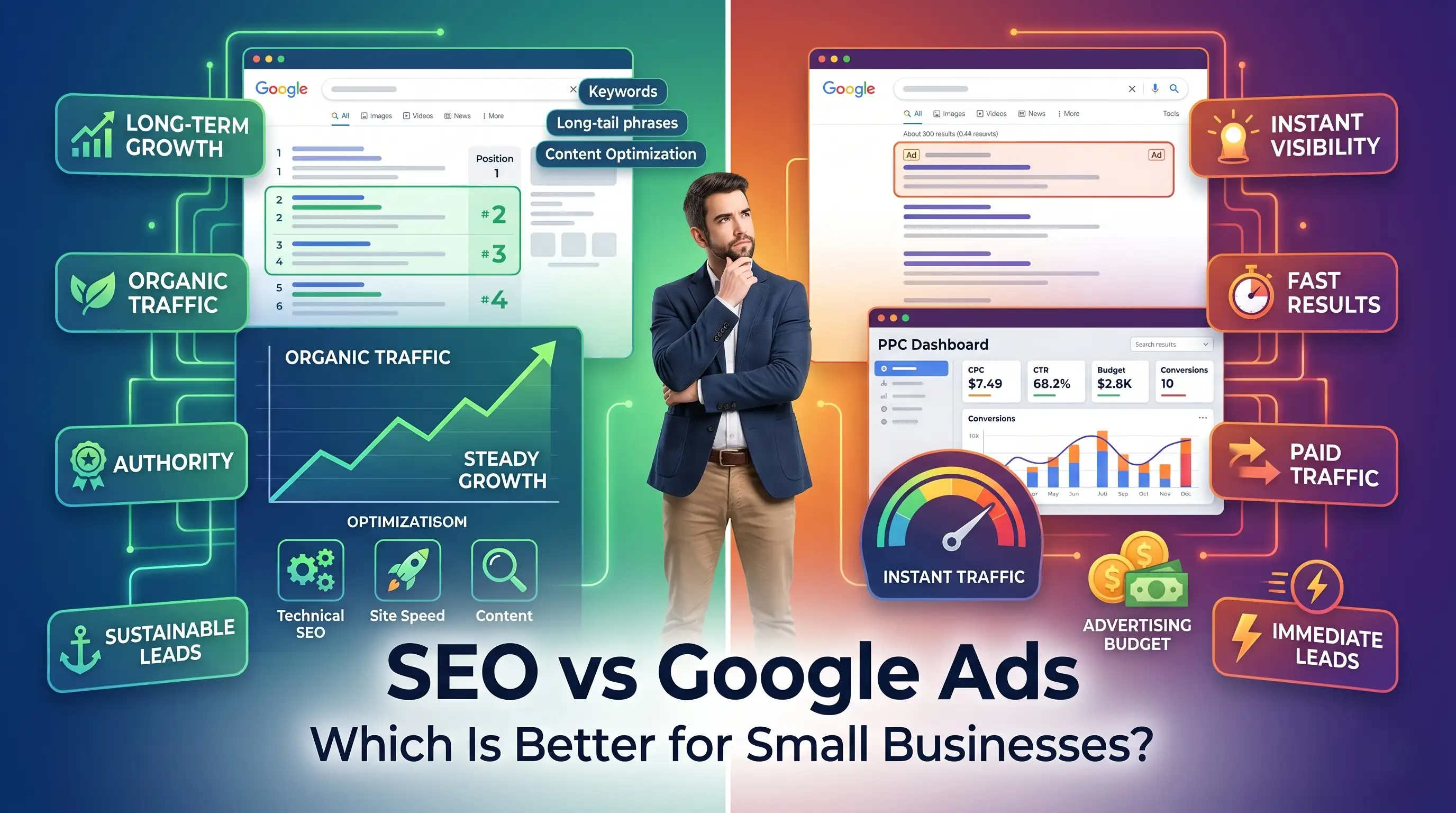
Compare SEO and Google Ads to understand costs, speed, ROI, and long-term business growth. Learn which strategy is right for your business.
Read Article →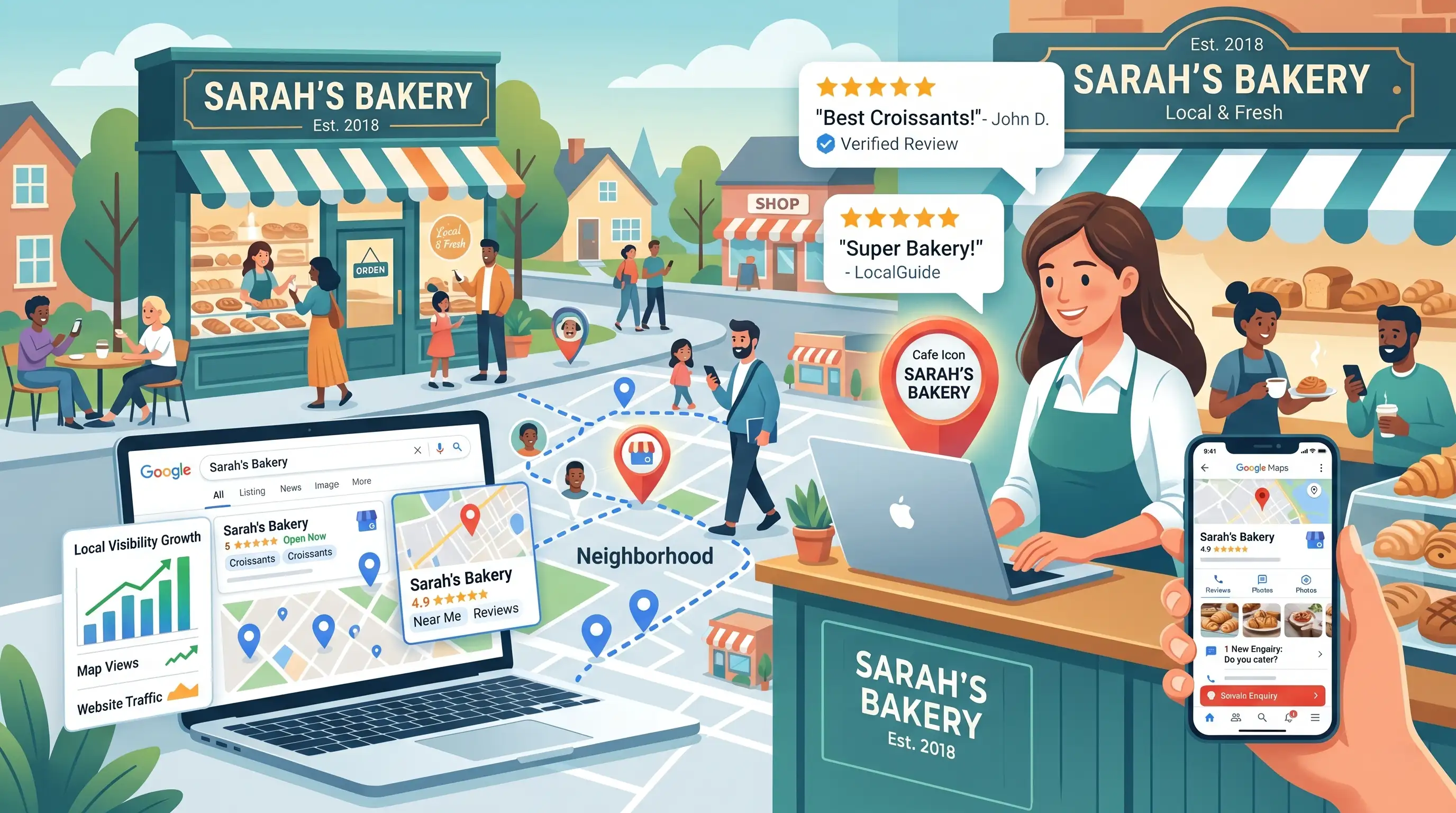
A practical local SEO guide for small businesses covering Google Maps rankings, Google Business Profile setup, reviews, and local visibility.
Read Article →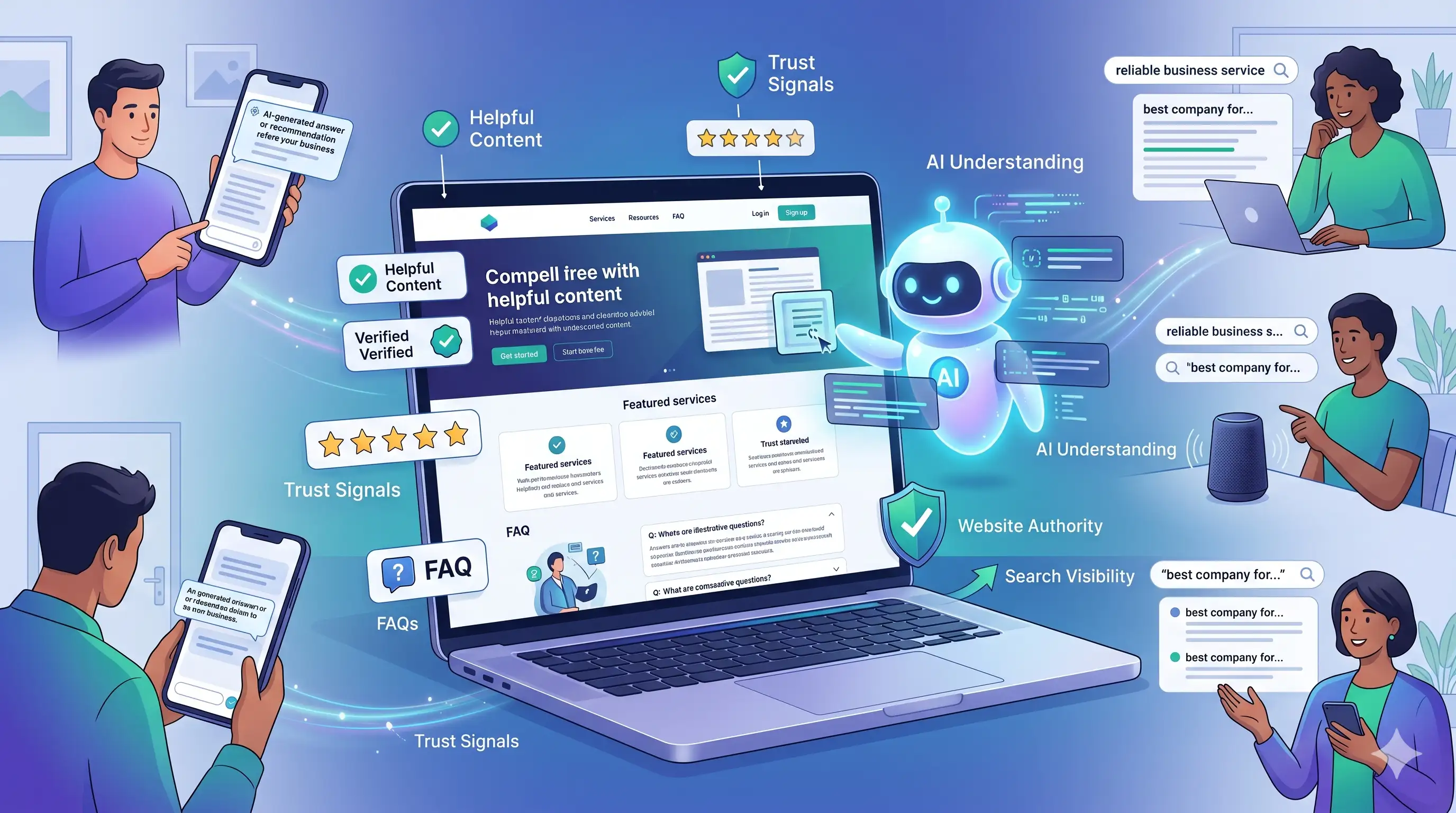
Learn practical steps to make your website easier for AI search tools to understand, reference, and recommend to potential customers.
Read Article →