

Startup2026-06-23
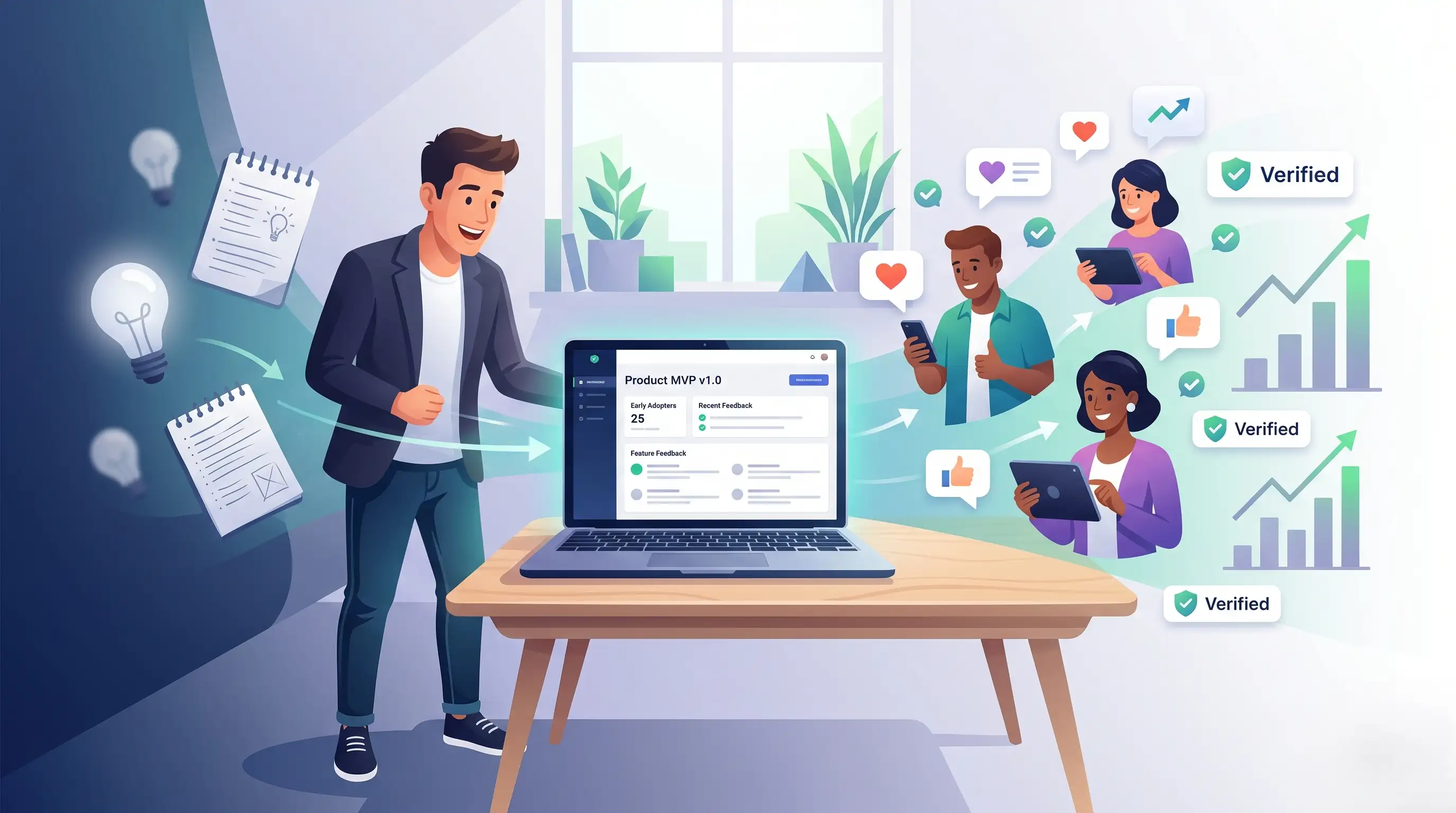
What Is an MVP and Why Startups Need It?
Learn what an MVP means, why startups need one, common mistakes to avoid, and how to build an MVP the right way.
Read Article →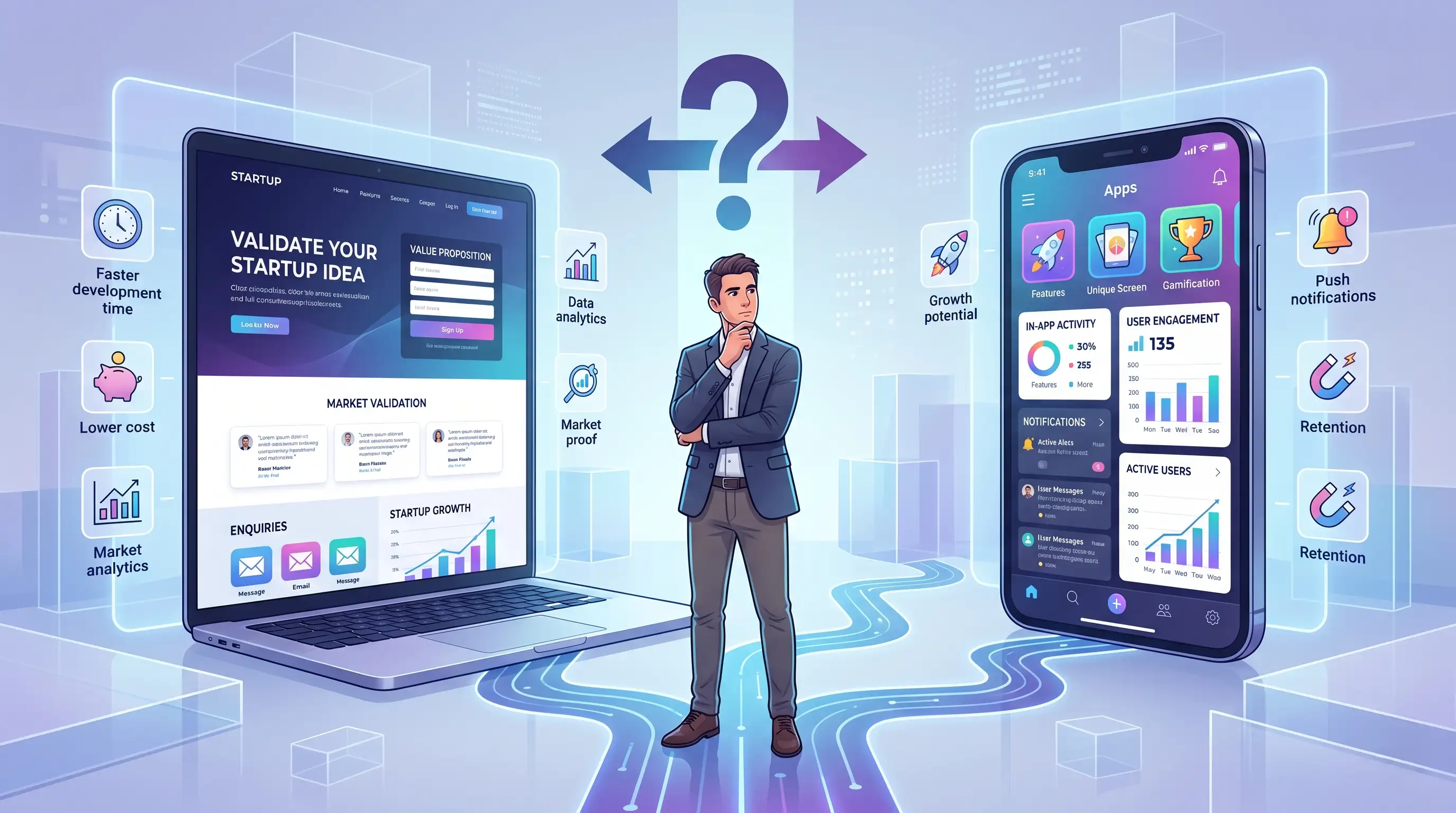
Every founder eventually faces this decision: should you build a website, a mobile app, or both — and which one comes first?
This is not just a technical question. It is a financial and strategic decision.
If you make the wrong choice, you could spend months and a large part of your budget building something customers may not actually want.
If you make the right choice, you can validate your idea faster, spend money wisely, and build toward something people genuinely use.
This decision matters more for startups than established businesses because startups are still validating demand.
This guide explains how founders should think about website vs app development before investing heavily.
Most startups should build a website or web-based MVP first, validate real demand, and then invest in a full mobile app once demand is confirmed.
A website is faster to build, cheaper to launch, and easier for early users to access.
A mobile app makes sense once you know users need repeated engagement, push notifications, offline features, or mobile-specific functionality.
In simple terms, validate first and build deeper later.
MVP stands for Minimum Viable Product.
It is the simplest version of your product that still delivers real value and helps you test whether customers actually want it.
An MVP is not about building something bad or incomplete.
It is about building only what is necessary to test your core idea before spending more time and money.
Examples of MVPs include:
The goal of an MVP is learning, not perfection.
Building a full product before validating demand is one of the most expensive mistakes a founder can make.
Validation helps you understand whether people actually want your solution.
It also shows what customers care about, how they describe the problem, and whether they are willing to sign up, enquire, or pay.
Validation matters because it:
It is cheaper to learn from a simple website than from a fully built mobile app that users do not use.
Starting with a website or web MVP is usually the lower-risk option.
Main advantages include:
A website allows you to test your idea with less friction.
Users can open a link, understand your offer, and take action immediately.
Starting with an app can make sense for certain startup ideas.
Main advantages include:
However, these benefits matter most when users already have a clear reason to use your product repeatedly.
For many early-stage startups, these advantages come after validation, not before.
A website or web MVP usually costs less than a full mobile app.
Mobile apps require more planning, development, testing, and maintenance.
A simple website or MVP can often be launched in days or weeks.
A mobile app usually takes longer because it needs deeper development and platform testing.
A website helps founders test ideas faster.
A mobile app can delay feedback because it takes more time to build before users can try it.
A website is easier to share through links, social media, ads, and search.
An app requires users to download and install it, which adds friction.
Websites can be discovered through Google search.
Mobile apps do not provide the same organic search visibility.
Websites work well with SEO, content marketing, ads, outreach, and landing pages.
Apps often need app store optimization, paid campaigns, or an existing audience.
A website-first approach is lower risk because the initial investment is smaller.
An app-first approach carries higher risk if demand is not validated.
Websites are easier to update.
Apps require app store review, platform updates, device testing, and ongoing maintenance.
Build a website first when:
This applies to many SaaS products, marketplaces, service platforms, communities, and early-stage consumer products.
Build an app first only when the product truly needs mobile-specific functionality from day one.
An app-first approach may make sense when:
This applies to fewer startups than many founders assume.
Many ideas that feel like they need an app can still be validated with a website first.
A practical startup sequence is:
1. Create a landing page.
2. Explain your offer clearly.
3. Add a waitlist, enquiry, preorder, or contact CTA.
4. Drive targeted traffic through outreach, content, ads, or communities.
5. Measure real signals like signups, enquiries, conversations, and payments.
6. Build a simple web MVP around the core feature.
7. Learn from real users.
8. Build the mobile app only when the usage pattern proves it is needed.
This approach reduces risk at every stage.
You are not guessing. You are building based on evidence.
A founder building a project management tool can start with a website and early access form.
After enough agencies or teams sign up, the founder can build a simple web MVP with only the core feature.
A mobile app can come later if users need on-the-go task updates or notifications.
A startup connecting customers with service providers can begin with a simple website.
The founder can test one city, collect enquiries, manually match providers, and understand demand.
Only after repeat usage is proven does an app become necessary.
A habit-tracking startup may feel like an app is required.
But the founder can still test the idea with a mobile-friendly web MVP first.
If users return regularly and request reminders or push notifications, then an app becomes a stronger next step.
An app does not automatically make a startup more credible.
A clear website with strong positioning can create trust during early validation.
Building before validating can waste money and time.
Founders should test whether customers actually want the solution first.
Apps usually take longer and cost more than founders expect.
They also need ongoing updates and maintenance.
A standalone app is harder to discover than a website.
A website can attract users through Google, content, and shareable links.
Without user feedback, founders often build features customers never asked for.
An MVP should focus only on the core value.
An MVP is meant to evolve.
It should improve based on real feedback and usage.
For most startups, the smartest path is not website vs app.
The better path is website first, then app later if the data supports it.
Starting with a website or simple MVP helps you test the idea, learn from users, and protect your budget.
A mobile app becomes the right next step when you have proof that users need deeper engagement, push notifications, offline access, or mobile-specific features.
Drovixx helps early-stage founders choose the right development path based on their idea, budget, and validation stage.
We build validation-focused websites, MVPs, and mobile apps when the product is ready for that next step.
Contact Drovixx to discuss the right MVP approach for your startup.
In most cases, yes. A website or web MVP is faster, cheaper, and lower risk for validating demand.
A simple landing page with a clear offer and call-to-action is often the cheapest way to test early interest.
A startup may need an app from day one if the core product depends on GPS, camera access, offline use, or frequent mobile engagement.
It depends on complexity, but a focused MVP is usually much faster to build than a full mobile app.
Yes. Without validation, you may spend heavily on an app that users do not want or use.
Yes. Many startups begin with a website or web MVP and later evolve into a full platform or mobile app.
Yes. SEO helps startups attract users through search, which a standalone app cannot do as effectively.
Drovixx helps founders plan and build the right solution at the right stage, from landing pages and MVPs to full mobile apps.
DROVIXX helps businesses build professional websites, improve Google visibility through SEO, and develop modern mobile applications.
Explore more insights from DROVIXX about business growth, websites, SEO, and app development.
Learn what an MVP means, why startups need one, common mistakes to avoid, and how to build an MVP the right way.
Read Article →