

Web Development2026-06-24
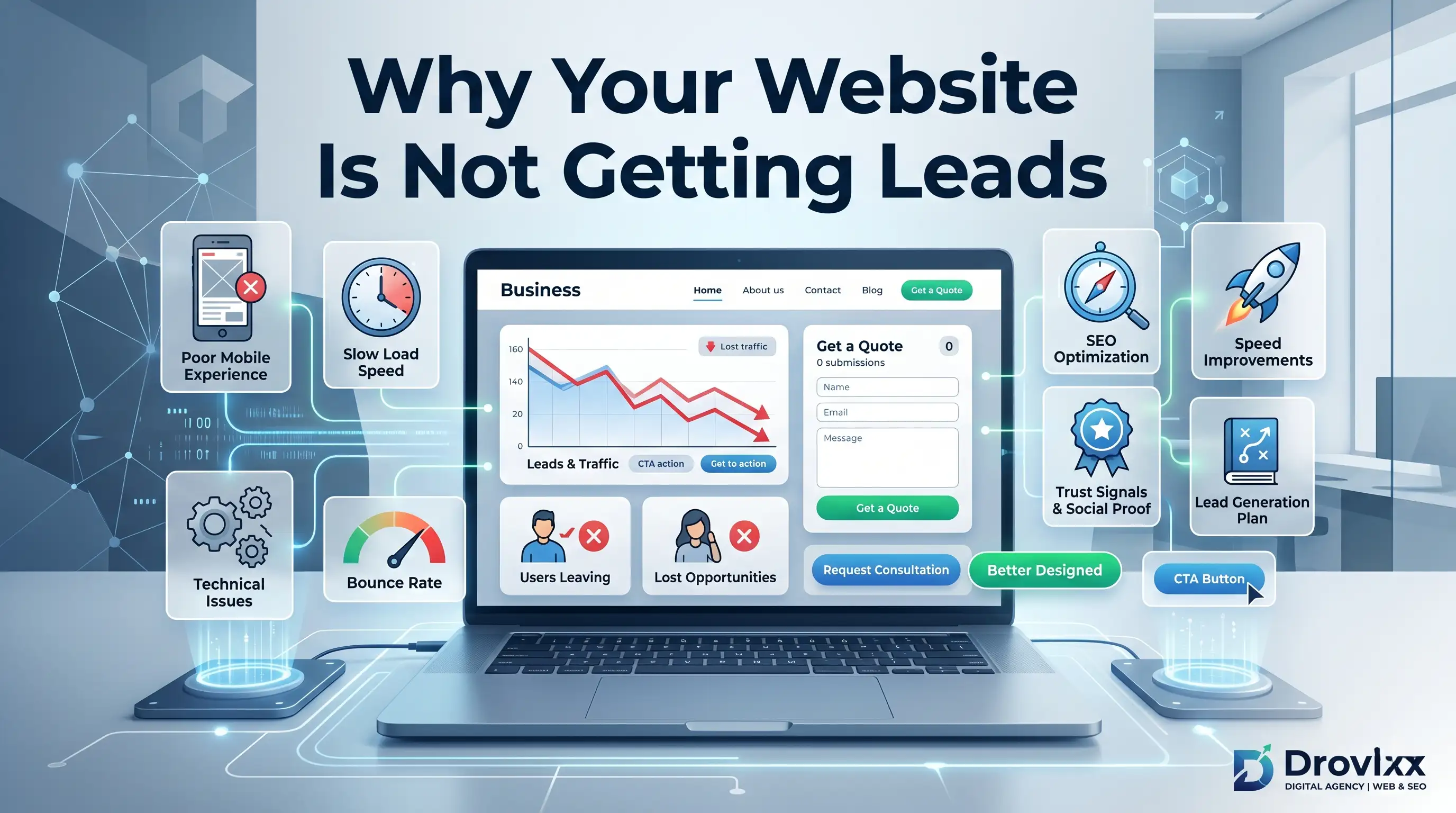
Why Your Website Is Not Getting Leads
Discover why your website is not getting leads or enquiries, and learn practical fixes that turn visitors into customers.
Read Article →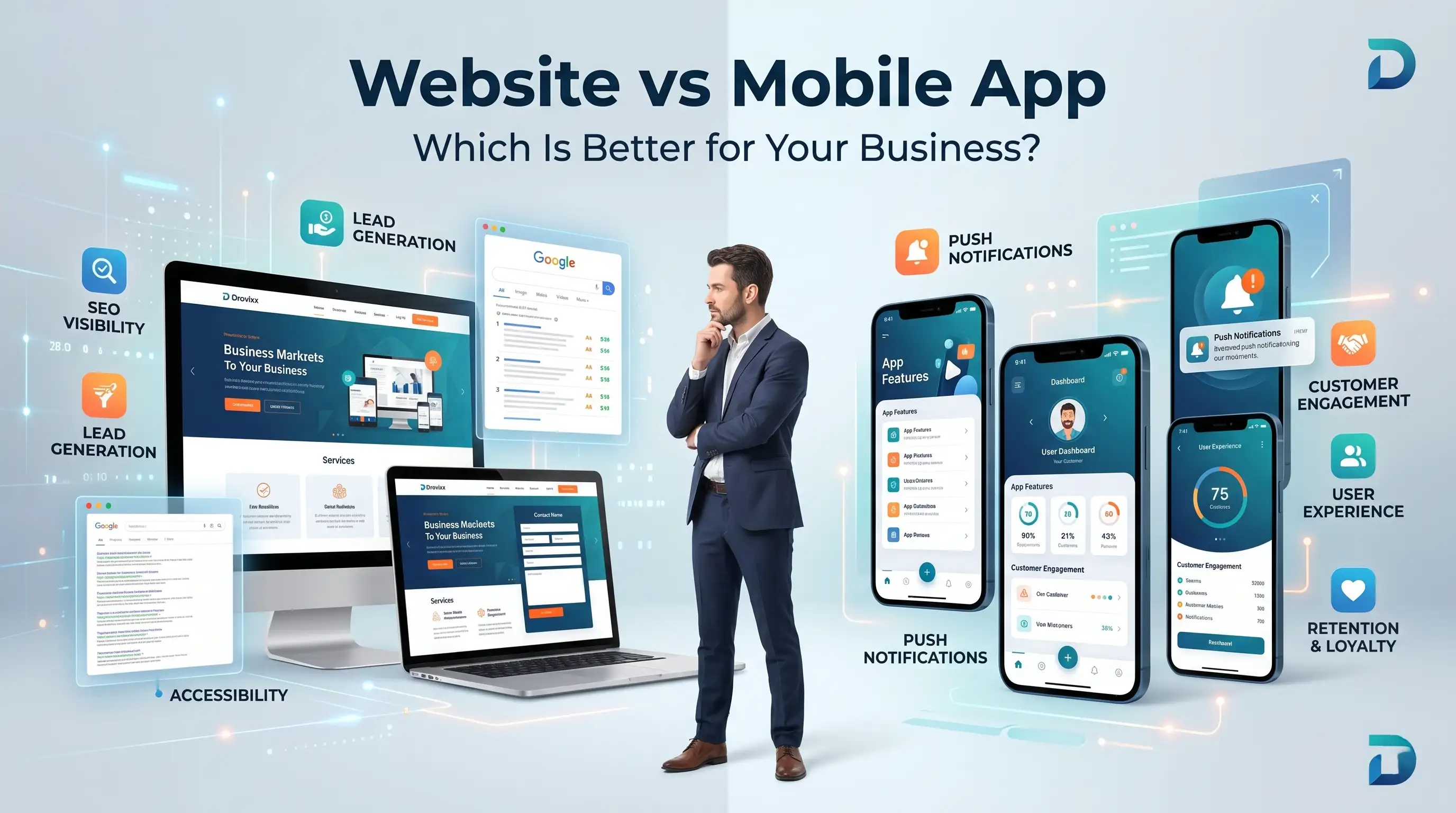
At some point, almost every business owner asks the same question: Do I need a website, a mobile app, or both?
Both options require investment, time, and planning. However, the right choice depends on your business model, budget, customer behavior, and growth stage.
This guide explains the differences between websites and mobile apps in simple business terms so you can make an informed decision.
Most businesses should start with a website.
A website is faster to build, easier to maintain, and helps customers discover your business through Google Search.
Mobile apps become valuable when you already have customers who regularly interact with your business and need a more personalized experience.
In simple terms:
For most businesses, discovery comes before retention.
A website is a collection of web pages that people can access through browsers such as Chrome, Safari, Edge, or Firefox.
Businesses commonly use websites for:
For many businesses, a website creates the first impression customers have of the company.
A mobile app is software that customers install on their phones through platforms like Google Play Store or Apple App Store.
Apps are commonly used for:
Unlike websites, apps require users to download and install them before use.
Websites are usually the most cost-effective way to establish an online presence.
Apps are especially useful for businesses that rely on frequent customer interaction.
Despite these limitations, websites remain the most practical starting point for most businesses.
An app without an active user base often struggles to deliver a return on investment.
Websites generally have a lower upfront cost and are easier to maintain.
Mobile apps usually require a larger investment because they need development, testing, and ongoing updates for different platforms.
A business website can often be launched within days or weeks.
A mobile app may take weeks or months depending on the complexity of features.
Websites can rank on Google and attract organic traffic through SEO.
Mobile apps do not provide the same level of search visibility and rely more on app store discovery.
Websites are excellent for attracting new visitors and generating enquiries.
Mobile apps excel at keeping existing customers engaged through push notifications and personalized experiences.
Anyone can access a website instantly through a browser.
Apps require users to download and install them first.
Websites are usually better for generating new business leads.
Apps are more effective for serving and retaining existing customers.
Websites rely on search engines, bookmarks, and repeat visits.
Apps remain on the user's device, making repeat interactions easier.
Website updates go live immediately.
App updates may require app store approval before users receive them.
Websites work well with SEO, content marketing, and Google Ads.
Apps work well with push notifications, loyalty programs, and in-app promotions.
A website is usually sufficient. Local SEO can help nearby customers discover your business.
A website with menus, contact details, and online ordering is usually enough initially. Apps become useful when customer orders increase significantly.
A website is essential for displaying packages and attracting traffic through search engines. Apps become useful for frequent travelers.
Start with a strong ecommerce website. Add a mobile app later to improve retention and repeat purchases.
A website or web-based MVP is usually the smartest first step. Validate demand before investing heavily in app development.
A website is critical for marketing, onboarding, and signups. Apps can be added later if users need mobile access.
A website with property listings and lead capture forms provides more value than an app in most situations.
A conversion-focused website is usually all that's needed to generate enquiries and build trust.
Websites work well for course discovery and enrollment. Apps become useful for ongoing learning and engagement.
Choose a website first if:
For most startups and service businesses, a website is the best first investment.
Choose a mobile app first if:
Apps make the most sense when customer retention is a major business goal.
Building both is a good choice when:
Many successful businesses use websites and apps together.
Starting with a website reduces risk and helps you validate demand.
Benefits include:
Before investing in an app, it makes sense to first confirm that customers actually want your product or service.
A practical strategy is:
1. Launch a website or MVP.
2. Generate traffic and gather feedback.
3. Validate demand through enquiries, signups, or sales.
4. Identify repeat customer behavior.
5. Build a mobile app once the business case is proven.
This approach reduces risk and prevents unnecessary spending.
Many businesses invest heavily in app development before confirming demand.
Apps do not replace SEO. Businesses still need websites to attract new customers.
Trying to launch both simultaneously can stretch budgets and resources too thin.
Just because a competitor has an app does not mean your business needs one.
Always focus on business goals first, then choose the right platform.
Use this checklist:
At Drovixx, we help businesses determine whether they need a website, mobile app, MVP, or a combination of solutions.
We help with:
Our goal is to help businesses invest in the right solution at the right time.
There is no universal answer to whether a website or mobile app is better.
For most startups, small businesses, and service providers, a professional website is the smarter first step because it is faster, more affordable, and easier to discover through search engines.
Once you have a loyal customer base and clear demand, a mobile app can become a valuable extension of your digital presence.
Not sure whether your business needs a website, mobile app, or both?
At Drovixx, we help businesses choose the right solution based on their goals, budget, and growth stage. Whether you need a lead-generating website, an MVP, or a full mobile application, we can help you build it efficiently.
Contact Drovixx to discuss your project.
Most startups should begin with a website or web-based MVP to validate their idea before investing in a mobile app.
Yes. Mobile apps typically require more development time, testing, and maintenance.
Absolutely. Many successful businesses operate entirely through websites.
No. Websites are much more effective for search engine visibility and organic traffic.
When customers frequently interact with the business and would benefit from a more personalized experience.
Yes, but most businesses benefit from launching a website first and validating demand before investing in an app.
A website is usually the better starting point because it supports SEO and attracts new customers. Apps can improve retention later.
Drovixx helps businesses plan, design, and build websites, MVPs, and mobile apps that align with their goals and budget.
DROVIXX helps businesses build professional websites, improve Google visibility through SEO, and develop modern mobile applications.
Explore more insights from DROVIXX about business growth, websites, SEO, and app development.
Discover why your website is not getting leads or enquiries, and learn practical fixes that turn visitors into customers.
Read Article →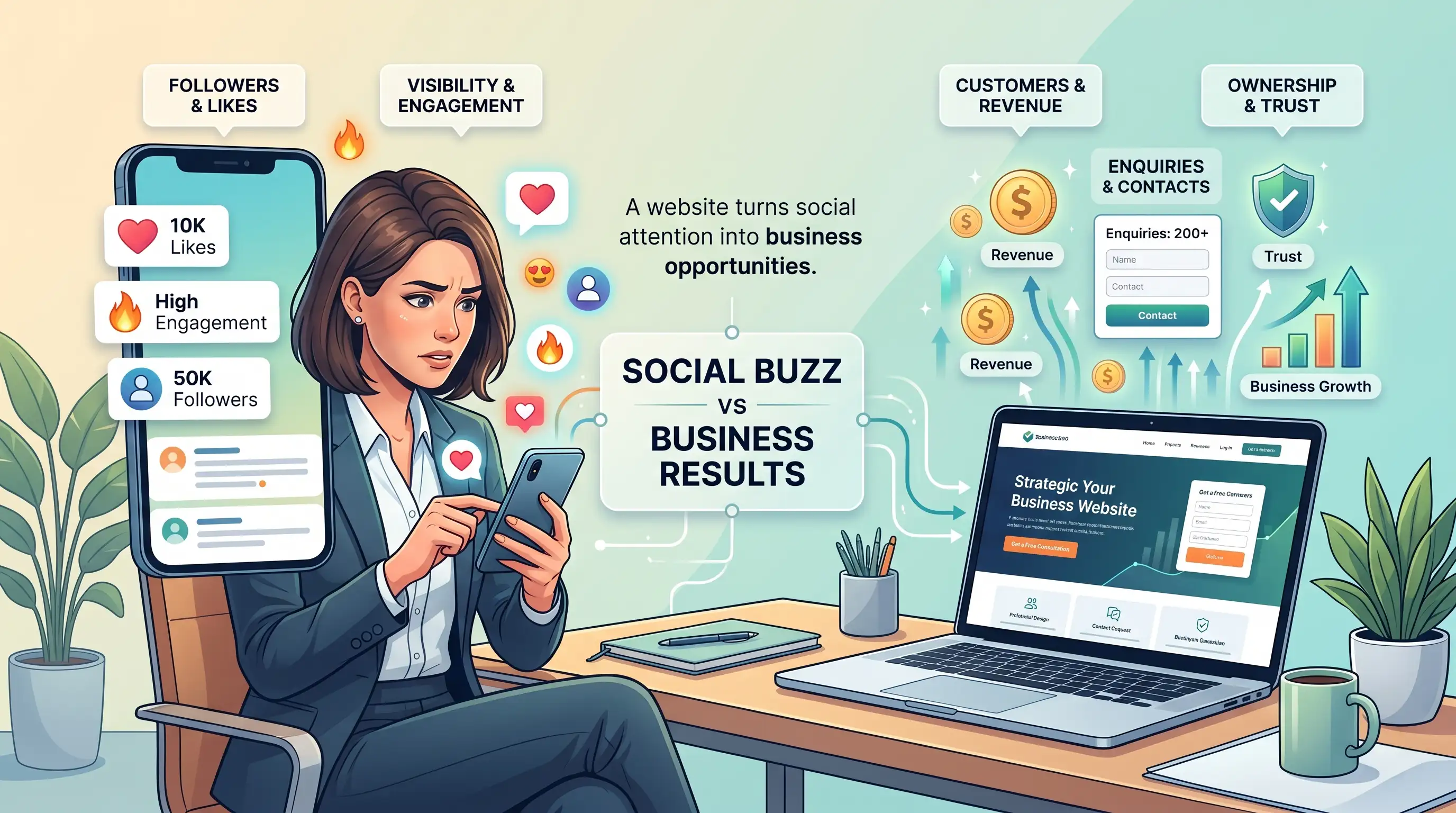
Social media helps you connect with customers, but it has real limits. Learn why your business still needs a website for trust, leads, and growth.
Read Article →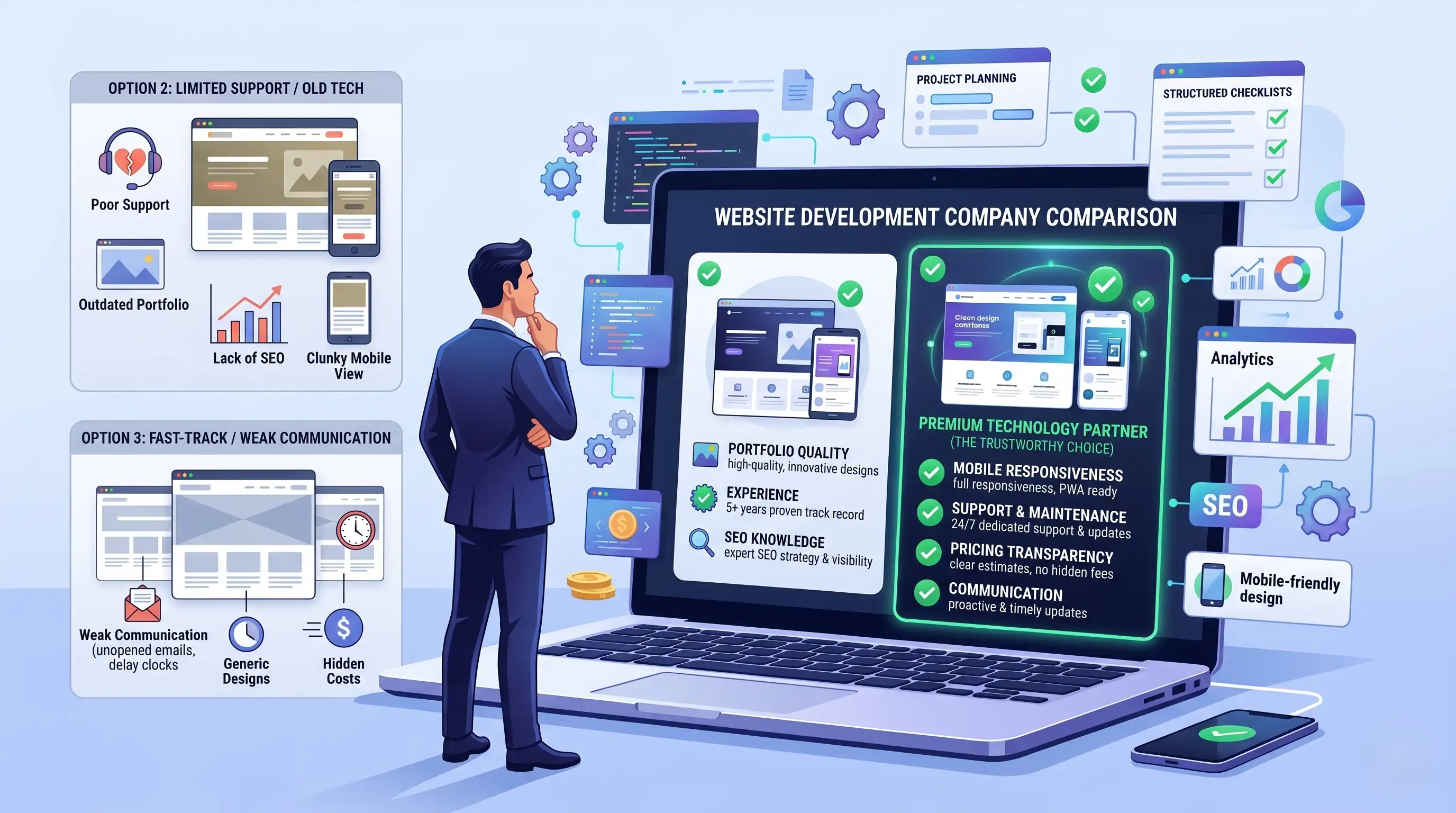
Not sure how to pick a website development company? Use this practical checklist, key questions, and red flags to avoid before you hire.
Read Article →