

Startup2026-06-21
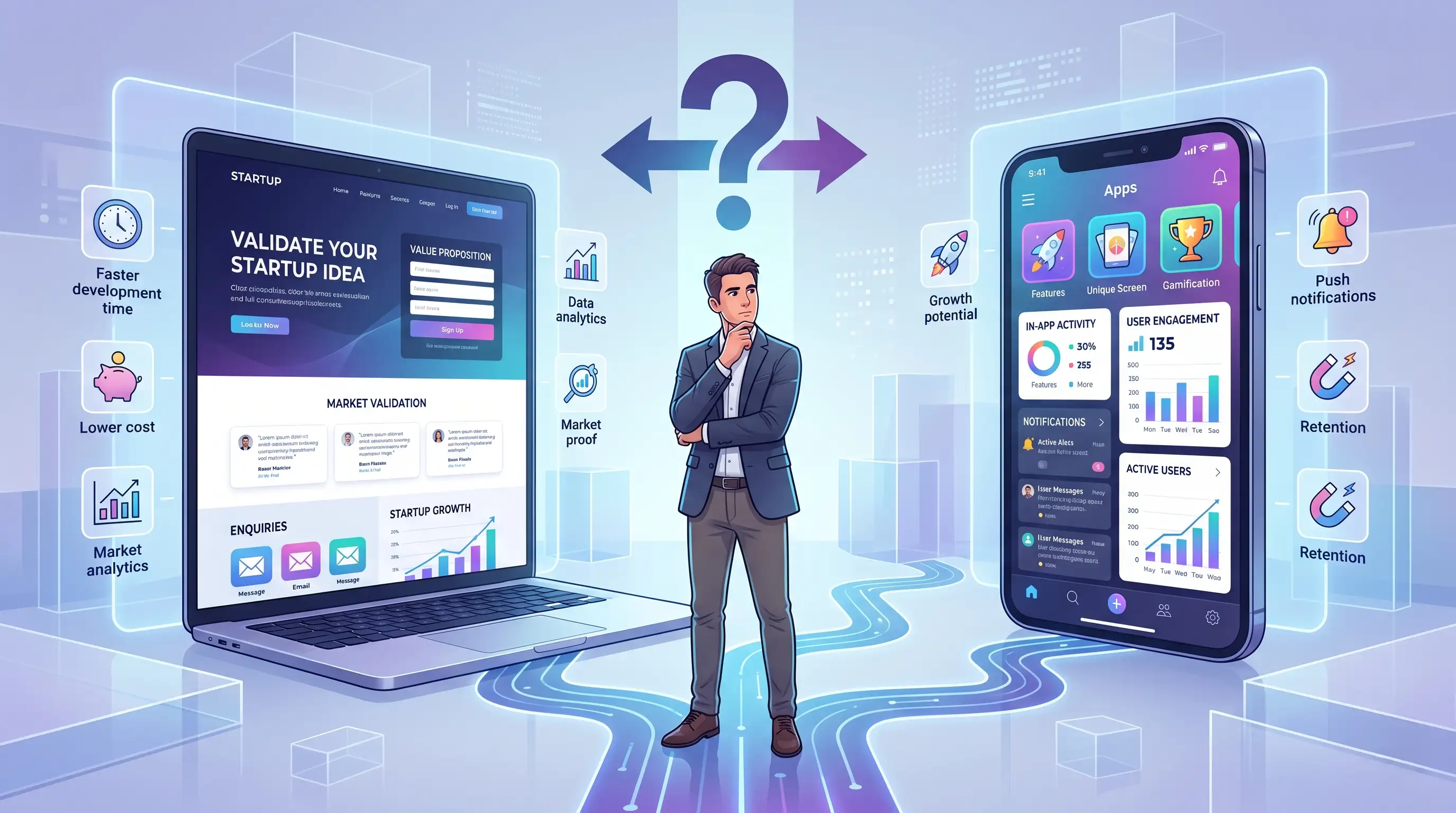
Website First or App First for Startups?
Should your startup build a website or app first? Compare cost, risk, and validation speed before spending your budget.
Read Article →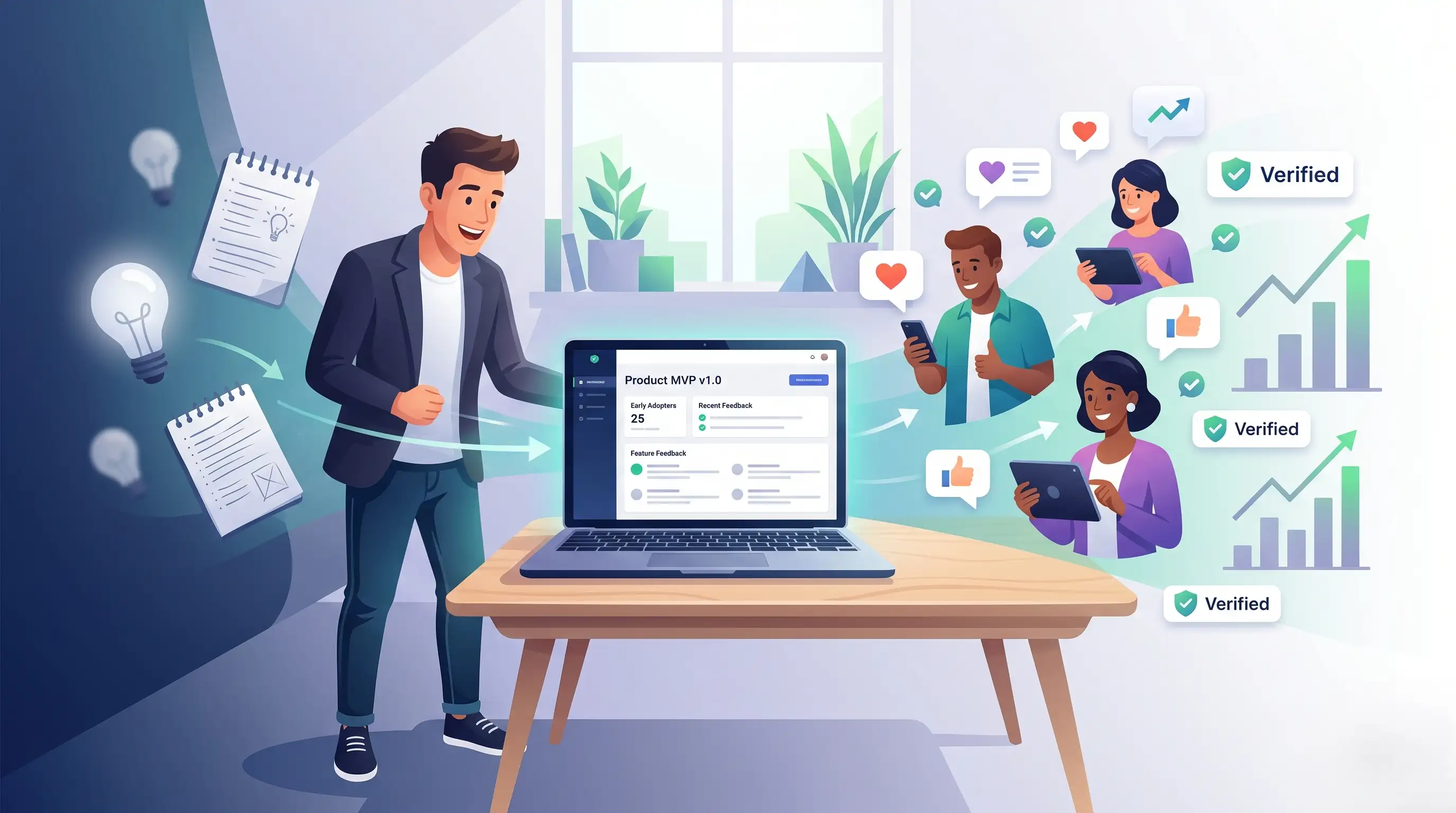
If you are building a startup, you have probably heard the term MVP many times.
You may hear it in investor meetings, founder podcasts, startup communities, or advice from other entrepreneurs.
But many founders misunderstand what an MVP actually means.
Some think an MVP is a half-finished product. Others think it can be low quality or broken because it is only a test. Both ideas are wrong.
A proper MVP is not about cutting corners. It is about building only what is necessary to test your core idea, learn from real users, and avoid wasting time and money on assumptions.
This guide explains what an MVP is, why startups need one, common mistakes founders make, and how to build an MVP the right way.
MVP stands for Minimum Viable Product.
An MVP is the simplest version of your product that still delivers real value to users and helps you test your core idea.
The goal of an MVP is not to impress users with many features.
The goal is to answer one important question:
Do people actually want this?
A good MVP should be:
Minimum means limited scope. It does not mean poor quality.
Startups work with limited time, budget, and certainty.
Many founders build full products based on assumptions, only to later discover that customers do not want the product, do not understand it, or do not use the features.
The MVP approach exists to reduce this risk.
Instead of spending months building everything, founders build a small version, release it early, and learn from real users.
This helps startups build based on evidence, not guesses.
An MVP and a full product serve different purposes.
An MVP validates the idea.
A full product scales a validated idea.
An MVP asks:
Should we build this?
A full product asks:
How do we grow this?
Trying to build a full product before validation can waste time, money, and startup runway.
An MVP helps startups launch faster because it includes only essential features.
Instead of waiting months for a full product, founders can start testing the idea earlier.
Building fewer features reduces development cost.
This protects the startup budget and allows founders to spend money where it matters most.
An MVP helps you test whether people actually want your product.
Real signups, enquiries, usage, payments, or feedback are much stronger than assumptions.
The longer you wait to test an idea, the more expensive mistakes become.
An MVP reduces risk by giving you feedback early.
Real users will often show you things you did not expect.
Their behavior can reveal what features matter, what is confusing, and what should be improved.
Investors usually prefer evidence over ideas.
A working MVP with real users, signups, revenue, or engagement can make your startup more convincing.
This is wrong.
An MVP should still work properly and deliver real value.
Minimum refers to features, not quality.
An MVP is not a broken or incomplete version of a larger product.
It should solve one specific problem well.
A prototype usually demonstrates an idea.
An MVP is tested with real users to collect real feedback and usage data.
An MVP does not need advanced design, but it should still be clear, usable, and trustworthy.
An MVP is the beginning of learning.
It should improve based on real feedback.
An MVP costs less because it focuses only on essential features.
A full product costs more because it includes more functionality, polish, integrations, and scalability.
An MVP can usually be built faster.
A full product may take much longer depending on scope.
An MVP includes only the core feature needed to test the main idea.
A full product includes broader features for different user needs.
An MVP has lower risk because the investment is smaller.
A full product has higher risk if built before demand is confirmed.
An MVP collects feedback early.
A full product often collects feedback after many major decisions have already been made.
Validation is the main purpose of an MVP.
A full product should come after validation.
Airbnb started with a simple version of the idea: helping people rent space to travelers.
The early version tested whether people would actually pay to stay in someone else's space.
The core idea was validated before the platform became large and complex.
Dropbox famously used a simple explainer video to show how the product would work before building the full version.
This helped test whether people were interested in the concept.
Uber started with a much simpler version focused on requesting rides in one city.
The early version helped test demand before the company expanded features, locations, and complexity.
Instagram began as a broader app, but the team noticed users cared most about photo sharing.
They simplified the product around that core behavior.
The lesson is clear: successful products often start narrow and improve based on real user behavior.
Start by clearly defining the problem you want to solve.
Avoid vague problems.
A strong MVP starts with a specific pain point.
Decide who has this problem most strongly.
Early MVPs work best when they target a clear group, not everyone.
Identify the one feature that solves the main problem.
Avoid adding nice-to-have features too early.
Build only what is necessary to deliver core value.
This could be a landing page, simple website, web app, mobile app, or manual process behind a simple interface.
Do not wait until everything feels perfect.
Release the MVP to real users and start learning.
Collect both qualitative and quantitative feedback.
This can include user conversations, surveys, analytics, signups, drop-offs, and usage patterns.
Use feedback to decide what to improve, remove, or build next.
Do not build only based on assumptions.
A good MVP should include:
The MVP should be simple, but it should not feel careless.
Avoid adding too much too early.
Features to avoid at the start include:
These features may be useful later, but they can slow down early learning.
This is one of the biggest MVP mistakes.
More features increase cost, delay launch, and make feedback harder to understand.
An MVP should evolve.
It is not the final version of your startup product.
Internal opinions are not enough.
You need feedback from real users.
Do not build infrastructure for thousands of users before confirming that the first users care.
Negative feedback can be valuable.
It helps you understand what is not working.
Sometimes a simple landing page can test the idea.
You do not always need a full app immediately.
A website MVP is better when:
For most early-stage startups, this is the better starting point.
A mobile app MVP is better when:
A mobile app MVP should be chosen when mobile-specific functionality is truly necessary.
An MVP can make fundraising stronger because it shows evidence.
Investors want to see that the founder can execute and that users show interest.
An MVP can demonstrate:
A pitch with an MVP is stronger than a pitch based only on assumptions.
An MVP is not a shortcut or a weak version of your real product.
It is a smart way to test whether your startup idea is worth building further.
Instead of spending months building a full product based on assumptions, an MVP helps you launch faster, learn from users, and invest with more confidence.
The startups that win are not always the ones that build the most features first.
They are often the ones that learn the fastest.
If you have a startup idea and want to build a focused MVP without overspending, Drovixx can help.
We help founders plan, design, and build MVPs as websites, web apps, or mobile apps based on the right stage of the idea.
Contact Drovixx to discuss your MVP.
MVP stands for Minimum Viable Product. It is the simplest functional version of a product that delivers value and helps test demand.
No. A prototype shows how something might work, while an MVP is used by real users to collect feedback and validate demand.
It depends on complexity, but a focused MVP is usually faster to build than a full product.
For most early-stage startups, a website MVP is faster, cheaper, and lower risk. A mobile app MVP makes sense when mobile-specific features are essential.
Yes. An MVP with real users, signups, usage, or revenue can make your startup more credible to investors.
No. The main goal of an MVP is validation and learning. Profitability can come later.
The biggest mistake is adding too many features before validating the core idea.
Drovixx helps founders identify the core problem, choose the right MVP format, and build a focused product for fast validation.
DROVIXX helps businesses build professional websites, improve Google visibility through SEO, and develop modern mobile applications.
Explore more insights from DROVIXX about business growth, websites, SEO, and app development.
Should your startup build a website or app first? Compare cost, risk, and validation speed before spending your budget.
Read Article →