

Web Development2026-06-24
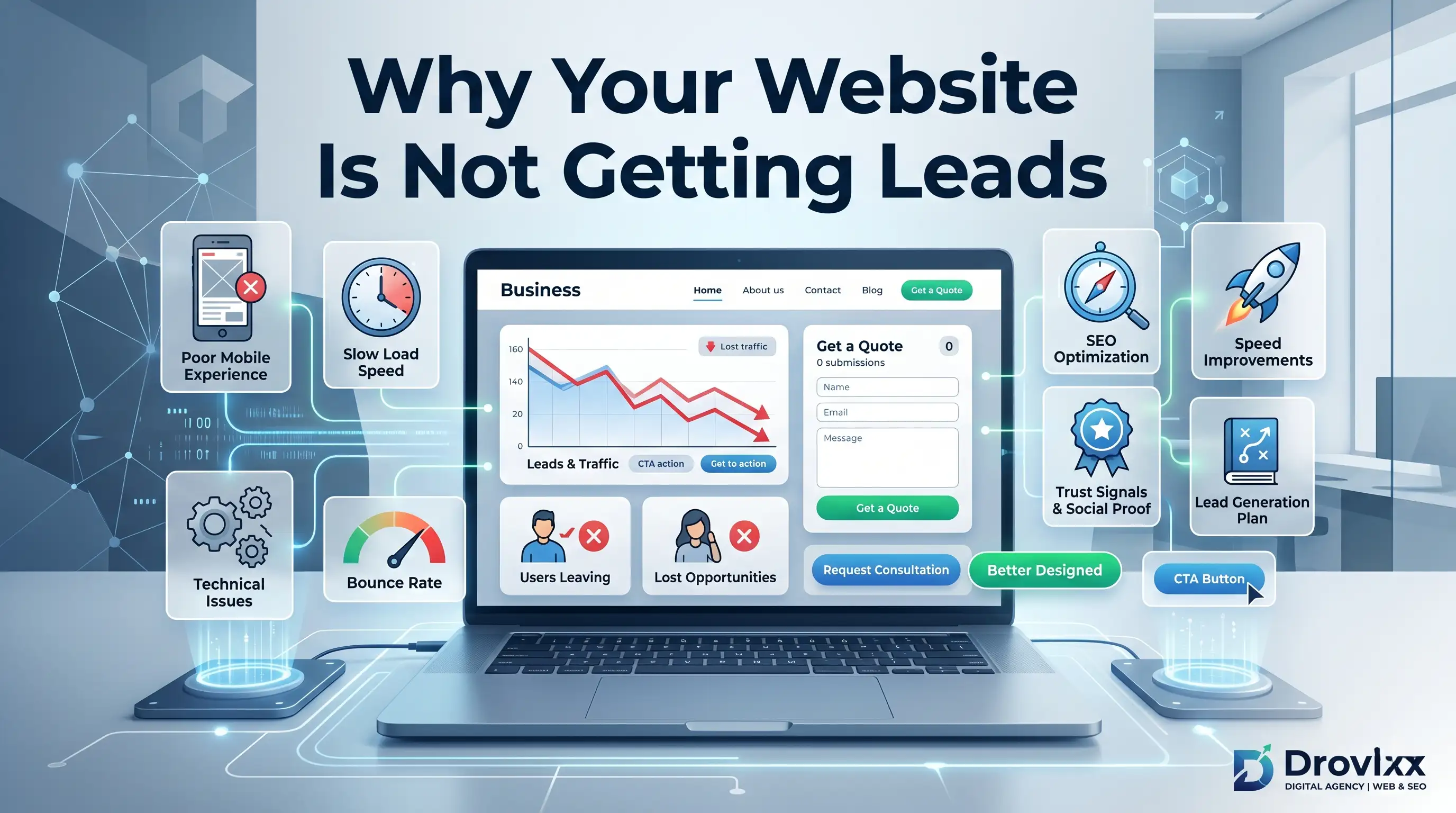
Why Your Website Is Not Getting Leads
Discover why your website is not getting leads or enquiries, and learn practical fixes that turn visitors into customers.
Read Article →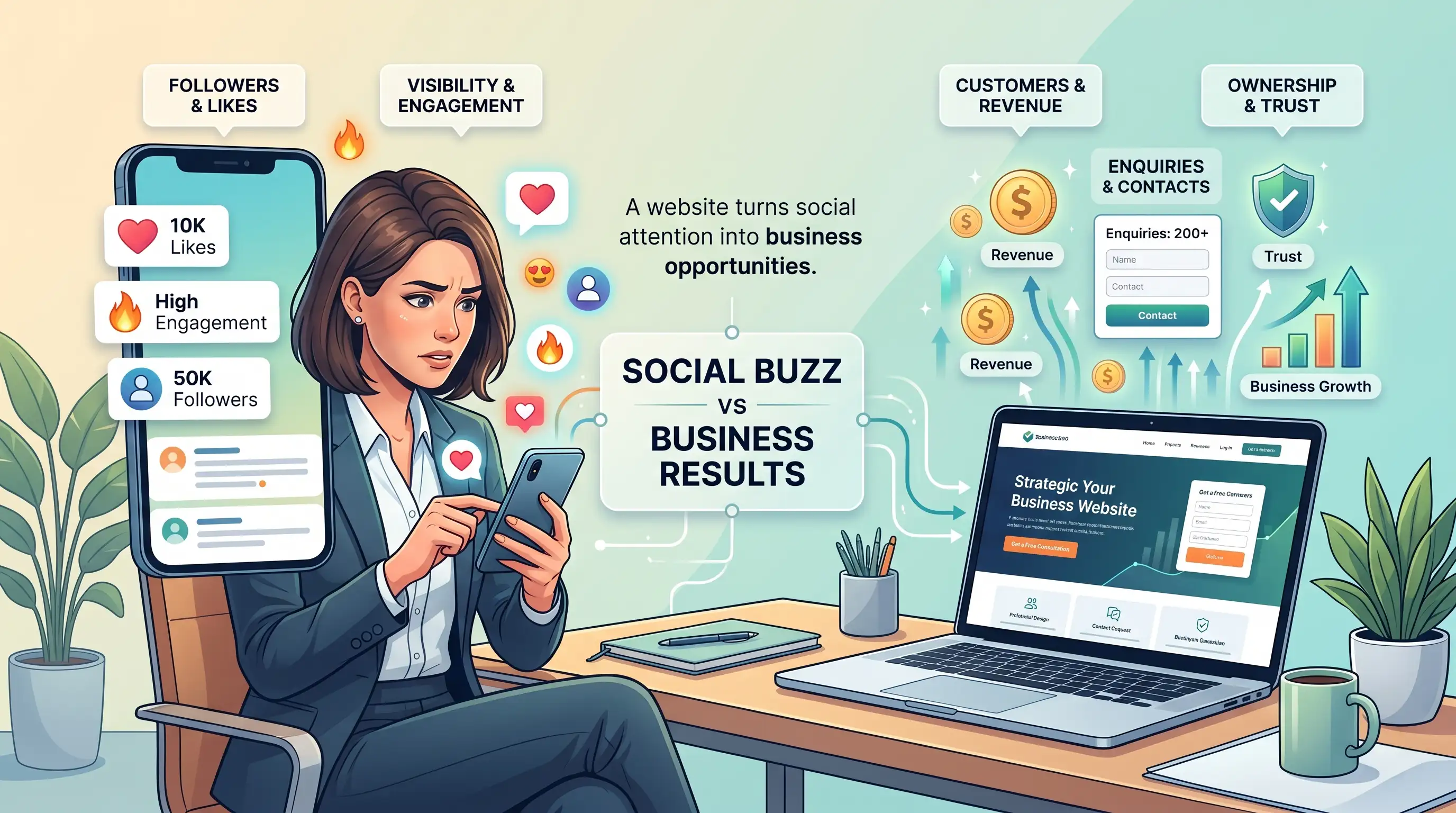
It is easy to understand why many small businesses depend heavily on social media.
It is free to start, simple to post, and gives quick visibility through likes, comments, shares, and followers.
For many business owners, an Instagram page, Facebook page, or social media profile feels like having an online presence.
For some time, it may feel enough.
But social media alone has limits.
Followers do not always become customers. A viral post does not always create sales. A strong social media profile does not always build enough trust for serious buyers.
Also, algorithm changes, account restrictions, or platform changes can suddenly reduce your reach.
This does not mean social media is bad.
Social media is valuable. But relying on it alone without a proper website can limit your trust, visibility, lead generation, and long-term growth.
Social media is not enough on its own for most businesses.
It is useful for engagement, awareness, and communication, but it has limitations around ownership, search visibility, trust, and lead generation.
Social media is a platform you use.
A website is a digital asset you own.
Social media helps people discover and interact with your business.
Your website helps convert that interest into enquiries, bookings, sales, and long-term credibility.
Social media is still important for business growth.
It helps businesses:
For many businesses, social media is one of the easiest ways to start marketing.
But it should support your website, not replace it completely.
Social media marketing can help your business build familiarity over time.
When people see your posts regularly, they may remember your brand.
Social media also helps with:
This makes social media useful for restaurants, salons, ecommerce stores, agencies, coaches, creators, and many local businesses.
The problem starts when social media becomes the only online presence.
Social media platforms decide who sees your content.
Even if you have many followers, your posts may reach only a small percentage of them.
A change in algorithm can reduce your reach suddenly.
This is outside your control.
Accounts can be restricted, suspended, hacked, or banned.
Sometimes this happens because of automated systems or misunderstandings.
If your whole business depends only on that account, you can lose your online visibility overnight.
You cannot fully control how your business appears on social media.
You are limited by the platform layout, features, rules, and policies.
A website gives you more control over design, content, structure, and customer journey.
Social media profiles do not usually rank well for detailed service searches.
For example, someone searching "website development company in Chennai" is more likely to find business websites than Instagram profiles.
A website gives you better SEO opportunities.
Social media is rented space.
You do not own the platform, algorithm, or audience access.
A website is owned by your business and gives you a stable digital home.
For higher-value services, many customers expect a professional website.
A social media page alone may not feel enough to prove credibility.
A website with services, portfolio, testimonials, FAQs, and contact details builds stronger trust.
Social media usually depends on DMs, comments, or links.
A website can have proper forms, CTAs, WhatsApp buttons, booking systems, landing pages, and analytics.
This makes structured lead generation easier.
Social media feeds are not designed for structured business information.
Important details like pricing, services, FAQs, case studies, and policies can get buried.
A website organizes everything clearly.
Social media metrics like likes and views do not always show real business results.
A website with analytics can track form submissions, calls, clicks, enquiries, and customer behavior more clearly.
A website is your business's permanent digital home.
It gives you control, trust, visibility, and structure.
A business website helps because:
Your website should be the central place where all marketing channels lead.
Social media can create interest.
Your website can convert that interest into action.
A website is owned and controlled by your business.
Social media is owned by the platform.
Website visibility can grow through SEO and content.
Social media visibility depends heavily on algorithms.
Websites can rank for specific Google searches.
Social media has limited SEO power for service-based search intent.
A professional website builds strong trust, especially for serious buyers.
Social media builds familiarity, but may not be enough alone.
Websites can use forms, CTAs, booking systems, WhatsApp links, and landing pages.
Social media mostly depends on DMs, comments, or external links.
A website can fully match your brand design and message.
Social media design is limited by the platform.
A website can track user behavior and conversions in detail.
Social media analytics are useful but often limited for business outcomes.
A website can grow with new pages, services, blogs, products, and features.
Social media is limited by feed format and platform rules.
Website content and SEO can keep generating traffic over time.
Social media usually needs constant posting to maintain reach.
The best strategy is not website vs social media.
The best strategy is website plus social media.
Social media helps with:
Your website helps with:
For example, a bakery can post product photos on Instagram and send interested visitors to its website for menu, ordering details, location, and contact options.
This creates a complete customer journey.
A restaurant can use Instagram to post food photos, reels, offers, and behind-the-scenes content.
The website can show the full menu, location, reservation options, opening hours, and online ordering.
A travel agency can use social media to inspire people with destination photos and client experiences.
The website can provide package details, pricing, itinerary information, testimonials, and enquiry forms.
A real estate agency can post listings and updates on social media.
The website can provide detailed property pages, search filters, location information, agent contact options, and lead capture forms.
A renovation company can share completed project photos on social media.
The website can show detailed case studies, service pages, testimonials, FAQs, and quote request forms.
A startup can use social media to build community and share product updates.
The website can explain the product, pricing, features, roadmap, and sign-up process.
Social media is useful, but it should not be your only online presence.
Followers are not the same as customers.
You need a path that turns followers into leads or sales.
Organic reach can drop when algorithms change.
You need channels you control.
Many customers search on Google when they are ready to buy.
Without a website, you miss search traffic.
DMs and comments are not always enough.
A website gives structured lead capture through forms, calls, WhatsApp, and bookings.
A professional website can make your business feel more serious, stable, and credible.
A strong online presence usually combines four things.
Google helps customers find you when they are actively searching.
This includes SEO and Google Business Profile.
Your website is your central owned platform.
It holds your services, proof, content, contact details, and conversion flow.
Social media builds awareness, engagement, and brand personality.
It helps people stay connected with your business.
Reviews build trust across all channels.
They support your website, Google visibility, and social proof.
No single channel replaces the others.
Together, they create a stronger digital presence.
Social media followers show interest.
But interest needs a clear next step.
A website helps by providing:
For example, a fitness coach may have strong social media engagement.
But if followers cannot easily find program details, pricing, testimonials, or booking options, many will not convert.
A website gives those followers a clear path to becoming customers.
Social media is valuable for awareness, engagement, and brand personality.
But it was not designed to be your business's permanent digital home.
Algorithms change. Accounts can be restricted. Platforms can shift.
A website fills the gaps social media cannot fully solve.
It gives you ownership, Google visibility, structured information, trust, and lead generation.
The best approach is to use both together.
Social media brings attention.
Your website converts that attention into customers.
If your business has social media but no proper website, or if your current website is not converting visitors into enquiries, Drovixx can help.
We build business websites that support social media traffic, Google visibility, and real lead generation.
Contact Drovixx to build a stronger online presence for your business.
Some businesses can manage short-term, but it is risky because you depend on platforms you do not own or control.
A website can target specific keywords, service pages, blogs, and local searches more effectively than social media profiles.
Yes. Followers show interest, but a website helps convert that interest into enquiries, bookings, and sales.
No. Social media is valuable, but it works best when combined with a proper website and Google visibility.
If you do not have a website, you may lose your main online presence. A website gives you a stable owned platform.
A website provides detailed information, trust signals, forms, WhatsApp links, booking options, and clear CTAs.
Ideally both. But even a simple professional website early on helps with credibility, SEO, and lead capture.
Drovixx builds websites that support social media traffic, improve Google visibility, and turn visitors into real enquiries.
DROVIXX helps businesses build professional websites, improve Google visibility through SEO, and develop modern mobile applications.
Explore more insights from DROVIXX about business growth, websites, SEO, and app development.
Discover why your website is not getting leads or enquiries, and learn practical fixes that turn visitors into customers.
Read Article →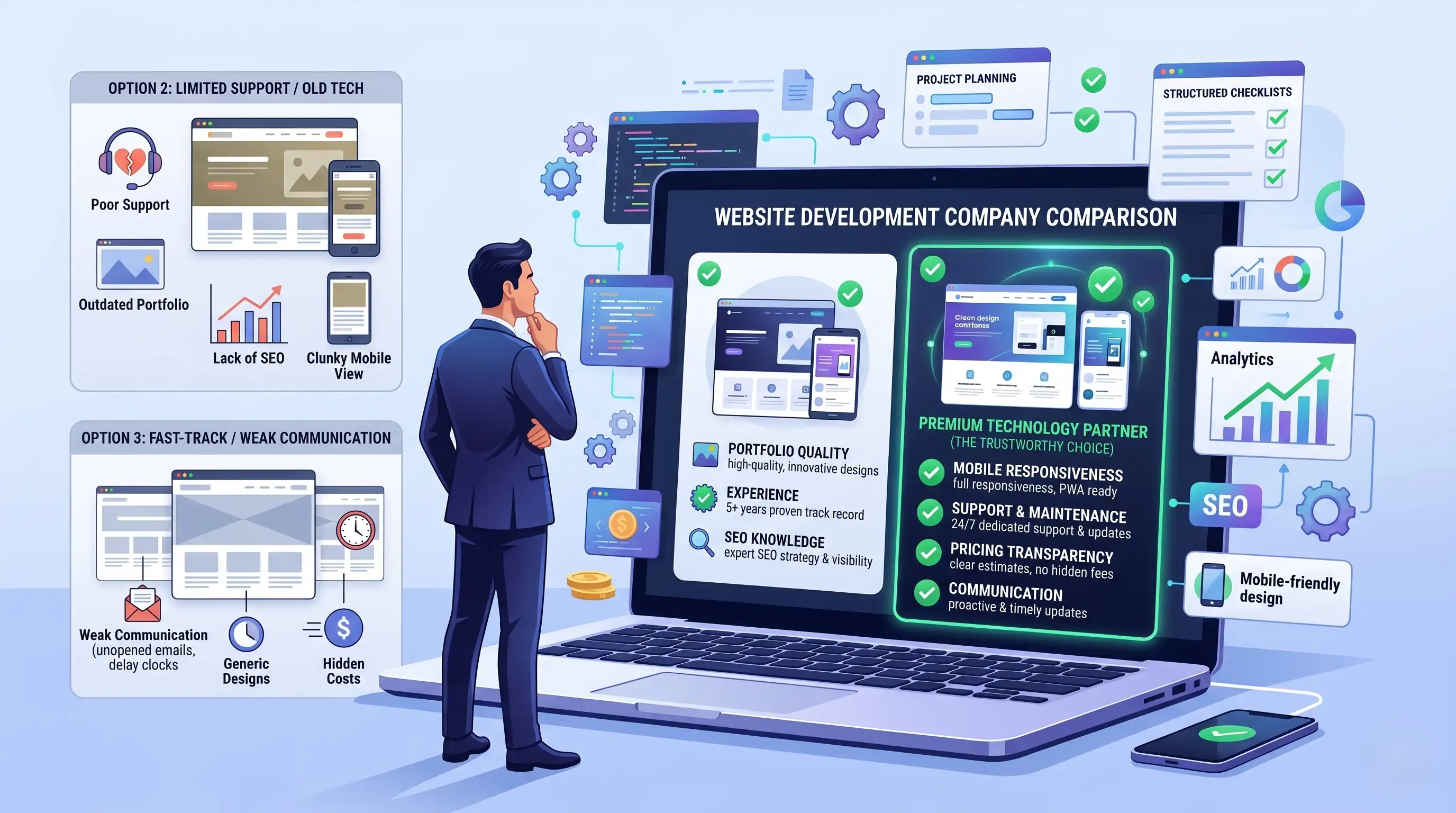
Not sure how to pick a website development company? Use this practical checklist, key questions, and red flags to avoid before you hire.
Read Article →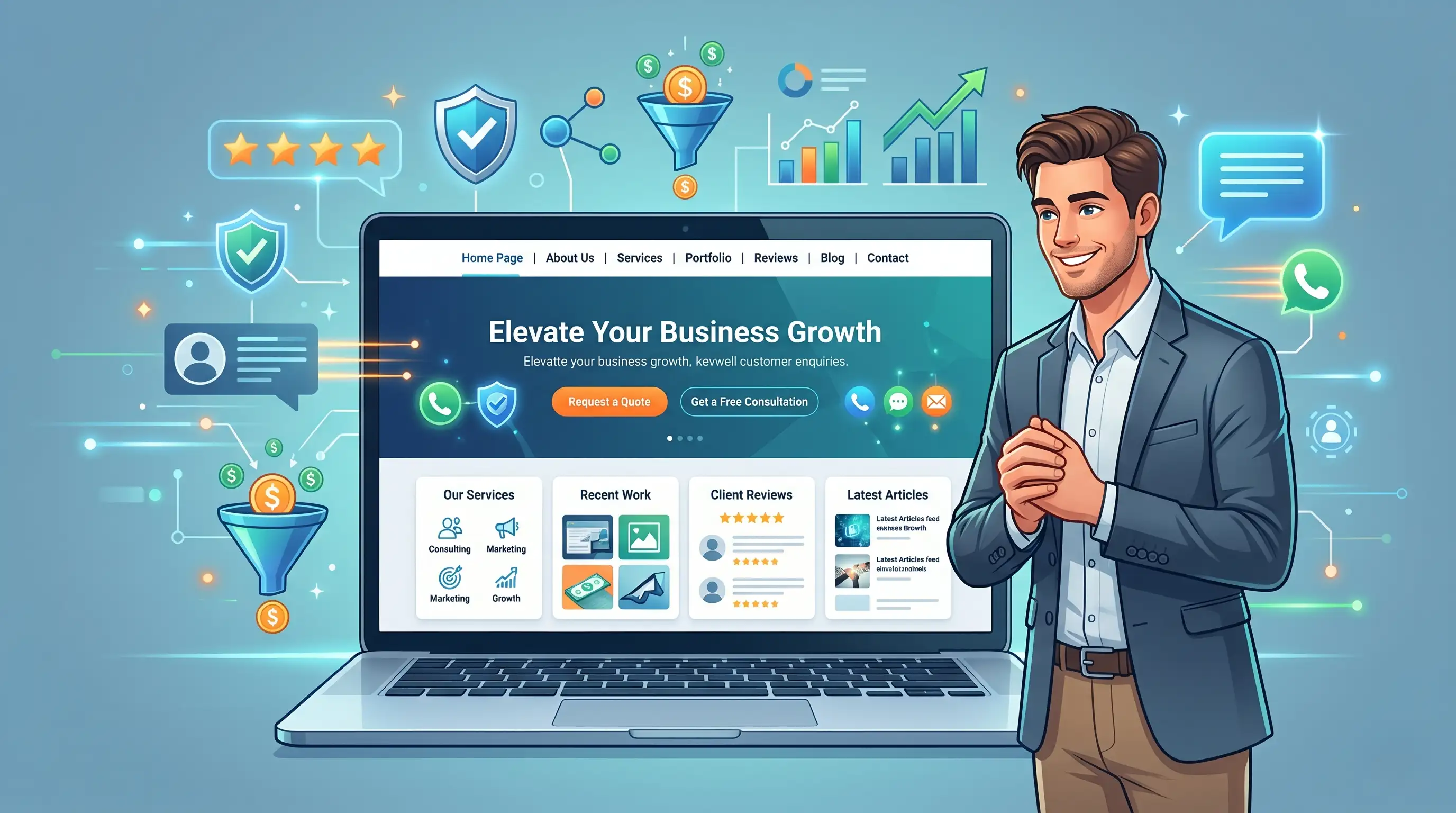
Not sure what pages your business website needs? Learn the essential and optional pages every business website should include.
Read Article →