

Web Development2026-06-24
Why Social Media Alone Is Not Enough for Business
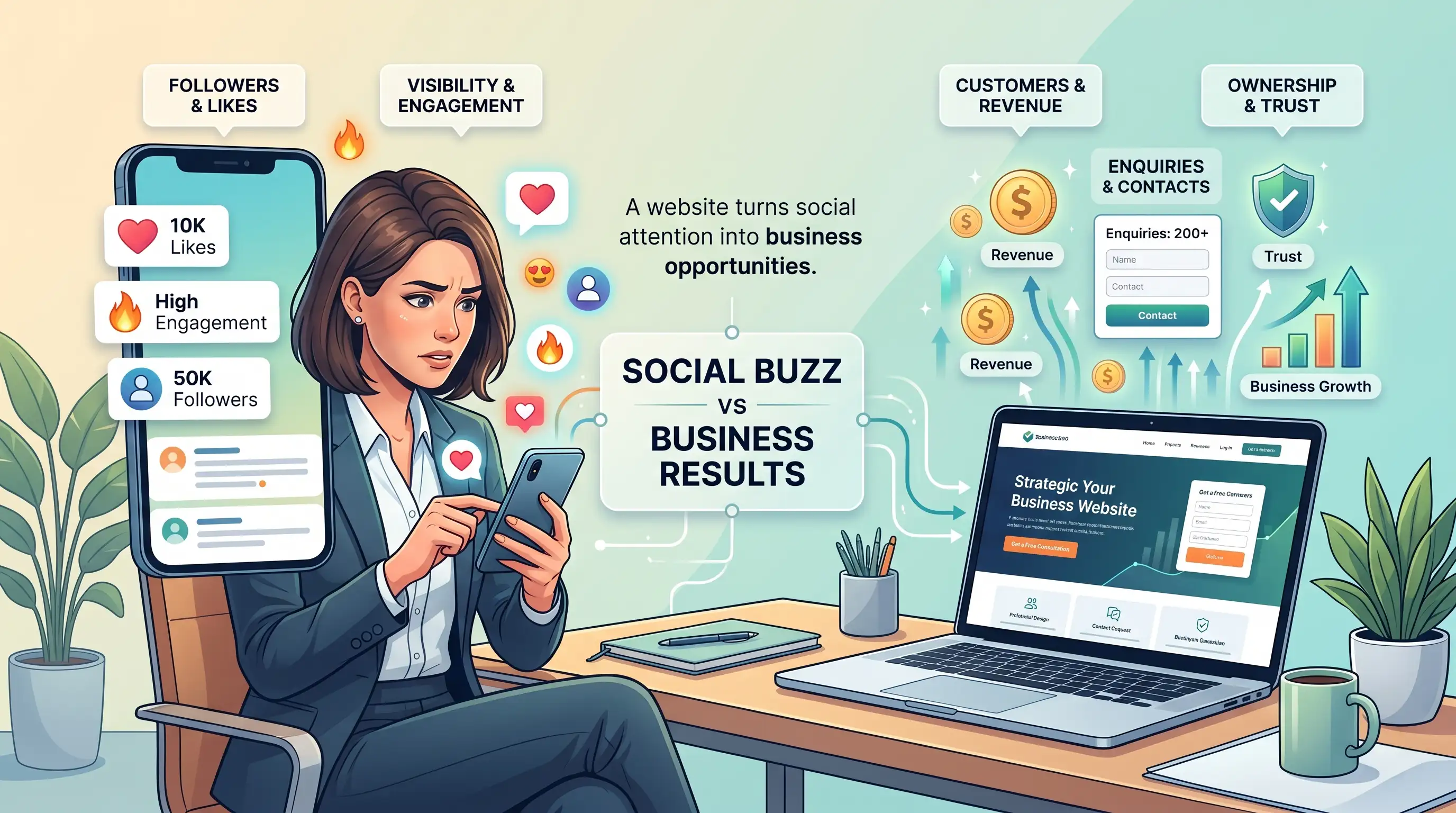
Social media helps you connect with customers, but it has real limits. Learn why your business still needs a website for trust, leads, and growth.
Read Article →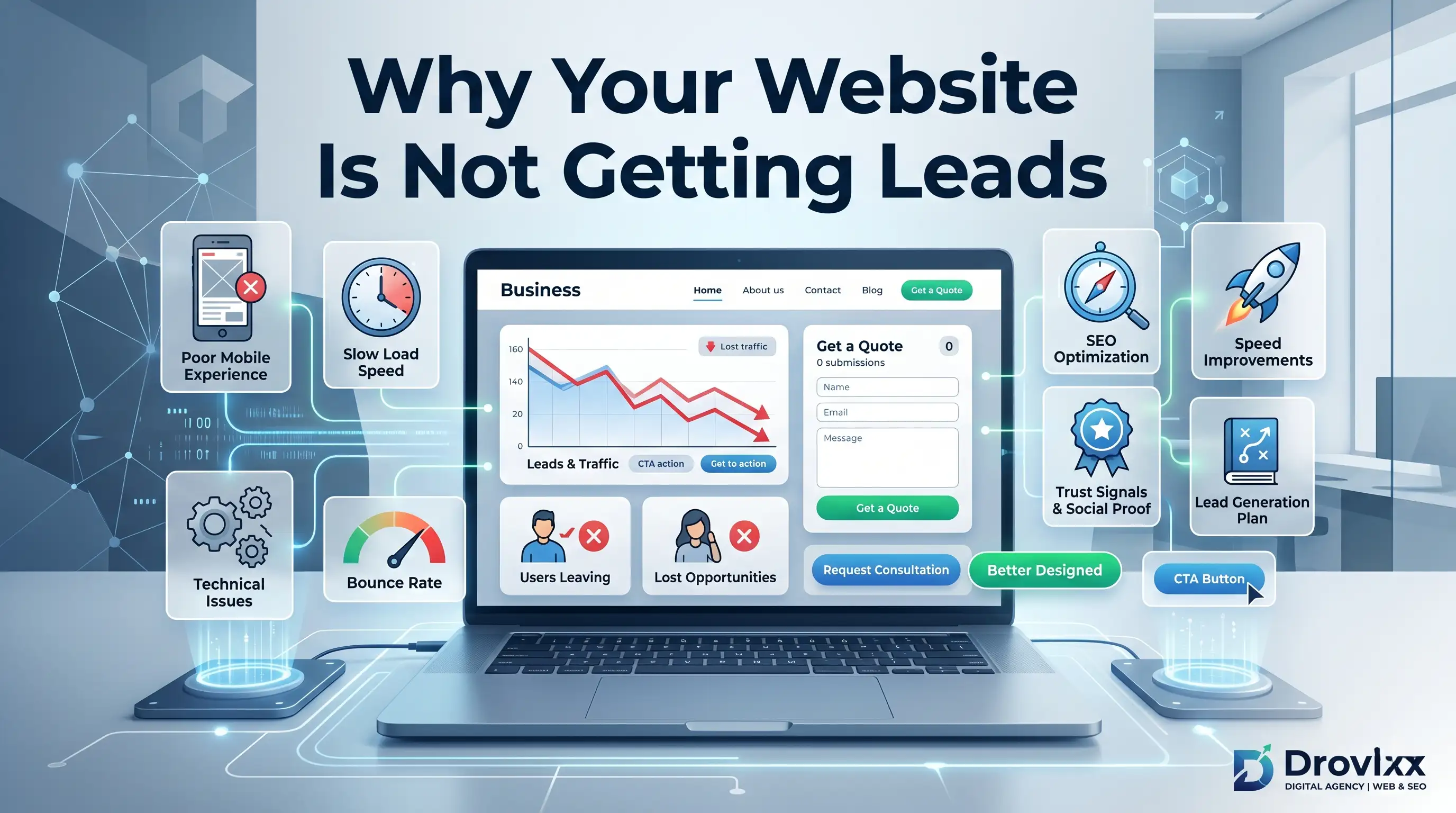
You spent money on a website. It looks decent. It has been live for months, maybe years. But your phone is not ringing, your inbox is quiet, and the contact form sits there collecting dust.
If this sounds familiar, you are not alone. This is one of the most common frustrations among small business owners, startup founders, and service providers.
The truth is, having a website and having a website that generates leads are two very different things. A website can look beautiful and still fail to bring in customers. A simple, well-structured website can quietly generate enquiries every single day.
This article breaks down why your website is not getting leads and what you can do to fix it.
In most cases, a website fails to generate leads because of a combination of issues like unclear messaging, poor user experience, weak calls-to-action, low-quality traffic, missing trust signals, and a difficult contact process.
Visitors do not send enquiries because either they are not finding your site, or they are finding it but not trusting or understanding it enough to take action.
If a visitor lands on your homepage and cannot understand what you do, who you help, and why you are different within a few seconds, they may leave.
Many homepages talk too much about the company instead of clearly explaining the customer's problem and solution.
Your headline should answer:
For example, instead of saying "Welcome to ABC Services", a better headline would be "Emergency Plumbing Repairs in Chennai — Available in 60 Minutes."
People judge credibility within seconds. An outdated design, mismatched fonts, low-quality images, or cluttered layout can make visitors feel your business is not professional.
Signs your design may be hurting leads:
Your website is often the first impression of your business. If it looks unprofessional, visitors may assume your service is also unprofessional.
A slow website pushes visitors away before they even see your offer.
Most people will not wait for a slow page to load, especially on mobile. They will simply go back and choose a competitor.
Common causes of slow speed:
Fix this by compressing images, using reliable hosting, and removing unnecessary scripts.
Many visitors browse websites from mobile phones. If your website is hard to use on mobile, you may be losing many potential leads.
Mobile problems to check:
If someone cannot easily browse or contact you from their phone, they may not try again.
Many websites explain their services but do not clearly tell visitors what to do next.
A weak CTA is something like "Submit" or "Learn More" without context.
A strong CTA is:
Your CTA should be visible near the top, middle, and bottom of the page.
Even when a visitor is ready to contact you, a difficult contact process can stop them.
Common contact form mistakes:
Keep your form simple. Ask only for name, phone or email, and message. Also give multiple contact options.
Sometimes the website is okay, but it attracts the wrong visitors.
This can happen when:
For example, a custom furniture business targeting only "furniture" may attract people looking for ready-made furniture, not custom furniture services.
Website words matter. If your copy is vague, too formal, or filled with jargon, visitors may lose interest.
Signs of poor copywriting:
Good website copy speaks directly to the visitor's problem and explains how your service helps.
People do not enquire with businesses they do not trust.
Your website should show proof that you are real, reliable, and capable.
Trust signals include:
A website with no trust signals feels risky to new visitors.
Even the best website will not generate leads if people cannot find it.
Many business websites are not properly optimized for search engines. They may not rank for relevant local or service-based searches.
SEO problems include:
You need traffic from people who are actively searching for your services.
Many businesses have only one general "Services" page. This is not enough.
Each important service should have its own page. For example, a digital agency should have separate pages for:
Dedicated pages help both SEO and conversion because each page speaks to one clear need.
If visitors cannot quickly find what they need, they leave.
Common navigation issues:
A good website should help visitors reach important information within two or three clicks.
Uncertainty reduces enquiries. If visitors do not know your process, starting price, or proof of work, they may leave and never come back.
You can improve trust by showing:
Transparency builds confidence.
Visitors want to know if you have done similar work before.
If your website does not show testimonials, case studies, or portfolio work, people may not trust you enough to enquire.
Add:
Even a few strong examples can improve conversions.
Many business owners do not know why their website is not converting because they are not tracking anything.
You should track:
Without tracking, you are guessing. With tracking, you can improve the right areas.
Start with the most important fixes first.
1. Clarify your message and headline.
2. Improve website design and mobile experience.
3. Increase website speed.
4. Make your CTA clear and visible.
5. Simplify your contact form.
6. Add trust signals and testimonials.
7. Improve SEO with the right keywords.
8. Create dedicated service pages.
9. Show your process, pricing range, and portfolio.
10. Track visitor behaviour and improve continuously.
Small improvements can create big results when done in the right order.
Use this checklist to audit your website.
Not every website needs a full redesign. Sometimes small fixes are enough.
But a redesign may be needed if:
If many problems are happening together, a proper redesign is usually better than small patch work.
SEO, AEO, GEO, UX, and CRO all help your website generate leads.
A website with SEO but poor UX may get traffic but no leads. A website with good design but no SEO may look great but get no visitors.
You need both visibility and conversion.
Visitors do not understand what you offer and leave quickly.
Fix: Clearly explain what you do, who you help, and why customers should choose you.
An outdated or unprofessional design reduces trust and credibility.
Fix: Use a clean modern design with consistent branding, colors, and typography.
Slow-loading pages cause visitors to leave before viewing your services.
Fix: Compress images, use reliable hosting, and remove unnecessary scripts.
Mobile visitors struggle to navigate your website.
Fix: Ensure your website works smoothly on all screen sizes.
Visitors do not know what action to take next.
Fix: Add clear calls-to-action such as "Get a Free Quote" or "Contact Us Today".
Potential customers abandon the enquiry process.
Fix: Keep forms short and provide WhatsApp, phone, and email contact options.
You receive traffic that is unlikely to become customers.
Fix: Improve SEO targeting and focus on your ideal customer profile.
Confusing content causes visitors to lose interest.
Fix: Write clear, benefit-focused content that speaks directly to customer problems.
Visitors hesitate because they do not trust the business.
Fix: Display testimonials, reviews, certifications, and portfolio examples.
Your website receives little or no relevant traffic.
Fix: Optimize pages for service keywords and local search terms.
Generic pages struggle to rank and convert visitors.
Fix: Create separate pages for each major service.
Visitors cannot easily find important information.
Fix: Simplify menus and make key pages easy to access.
Visitors are unsure what to expect.
Fix: Clearly explain your process, pricing ranges, and past results.
There is no proof that you can deliver results.
Fix: Showcase successful projects and customer feedback.
You do not know where visitors are dropping off.
Fix: Use analytics and heatmaps to understand user behavior and improve conversions.
If your website is not getting leads, it is usually not because of one single mistake. It is often a mix of unclear messaging, slow speed, poor design, hidden contact options, weak SEO, and missing trust signals.
The good news is that all these problems can be fixed.
With the right structure, content, design, SEO, and conversion strategy, your website can become a reliable lead generation tool instead of just an online brochure.
At Drovixx, we help small businesses, startups, and service providers turn underperforming websites into lead-generating tools through website redesign, SEO, app development, and conversion-focused improvements.
Contact Drovixx to get a practical and honest assessment of what is holding your website back.
Usually, it is because of unclear messaging, poor user experience, weak calls-to-action, low-quality traffic, or missing trust signals.
This usually means you have a conversion problem. People are visiting your site, but your design, content, CTA, or contact process is not convincing them to take action.
No. SEO brings visitors, but your website must also convert those visitors into enquiries through strong design, messaging, trust, and CTA.
The fastest fixes are usually improving your headline, adding clear CTAs, simplifying the contact form, and making WhatsApp or phone contact easy.
Yes. Many users browse from mobile. If your website is hard to use on phones, you can lose many potential enquiries.
Drovixx can review your website's design, SEO, content, user experience, and conversion flow, then improve your site to help generate more enquiries.
DROVIXX helps businesses build professional websites, improve Google visibility through SEO, and develop modern mobile applications.
Explore more insights from DROVIXX about business growth, websites, SEO, and app development.
Social media helps you connect with customers, but it has real limits. Learn why your business still needs a website for trust, leads, and growth.
Read Article →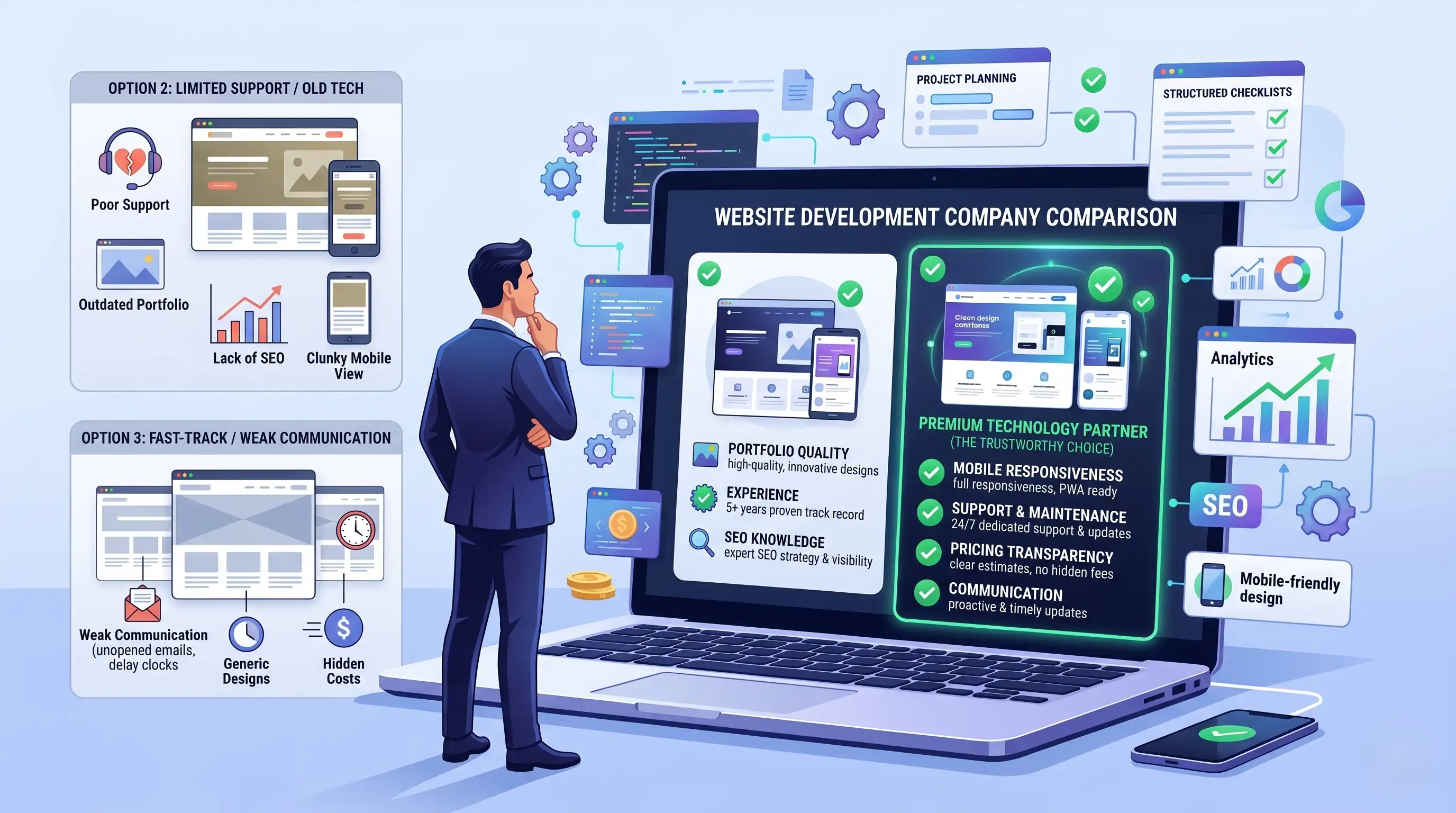
Not sure how to pick a website development company? Use this practical checklist, key questions, and red flags to avoid before you hire.
Read Article →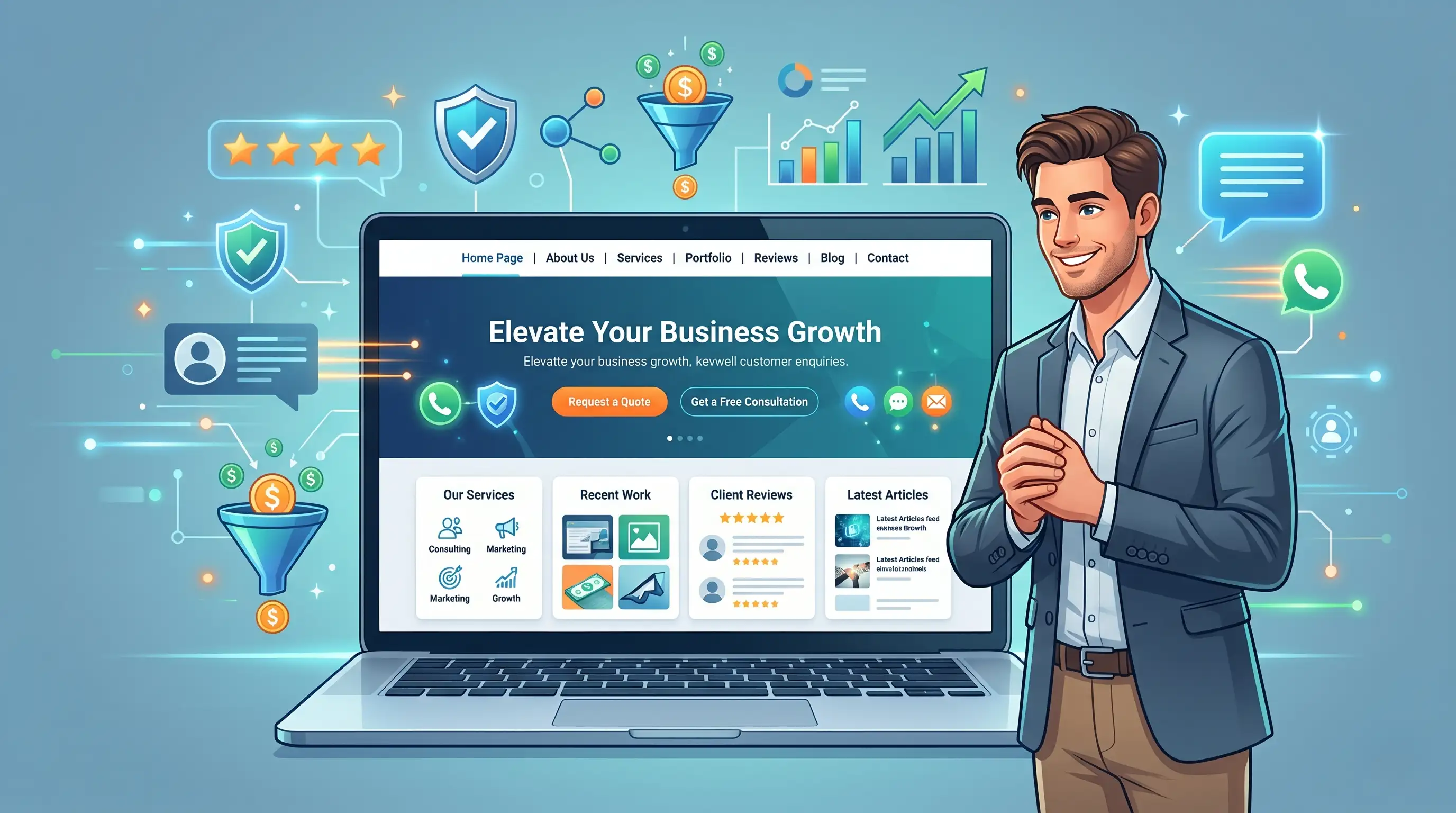
Not sure what pages your business website needs? Learn the essential and optional pages every business website should include.
Read Article →